

Updated:
Reviewed by Natalie Nassi, Esq., Managing Partner, RockPoint Law P.C.
If you bought a lemon car, you can get rid of it by selling it, trading it in, or pursuing a lemon law claim for legal remedies. If your vehicle qualifies under lemon law, you may be entitled to a manufacturer buyback or replacement vehicle. Selling or trading in a lemon is different from pursuing a lemon law claim, so make sure you understand your options before deciding what to do.
At RockPoint Law, Lemon Law is not just one of our practice areas; it is the center of our practice. With more than a decade of Lemon Law experience, we have recovered more than $30 million for over 1,500 vehicle owners. Our Founder and Managing Partner, Steven Nassi, was recognized as a New York Metro Rising Star by Super Lawyers from 2014 through 2018. If you are stuck with a lemon vehicle and unsure what to do next, contact us for a free case review to understand your options.
This blog explains how to determine whether your car qualifies as a lemon, the options available for getting rid of it, what to do before taking action, and how to pursue a lemon law claim.
How Do You Determine If Your Car Qualifies as a Lemon?
If you're thinking of getting rid of a lemon car, especially through a lemon law claim, you first need to know whether your vehicle qualifies. Not every vehicle issue qualifies your car as a lemon. Generally, a lemon is a vehicle with a substantial defect that affects its safety, use, or value, and the defect remains unresolved despite a reasonable number of repair attempts.
Certain signs may suggest that your vehicle is a lemon. For example, the manufacturer or authorized dealer may have attempted repairs multiple times, but the same defect keeps coming back. And this happens more often than you might think. In 2025, the National Highway Traffic Safety Administration reported 997 vehicle and vehicle-equipment safety recalls affecting more than 29 million vehicles. While a recall does not automatically mean your car is a lemon, it shows how common vehicle problems can be.
If you find yourself dealing with a recurring defect, knowing what qualifies as a lemon can help you understand your options. Your car may also qualify if it has been out of service for extended periods because of repairs. In some states, the timing of the defect may also matter, such as when the problem developed while the vehicle was covered by an applicable warranty.
However, the requirements for a vehicle to qualify as a lemon vary by state. States may differ in what defects qualify, how many repair attempts are considered reasonable, and how long the vehicle must be out of service. Warranty requirements, time and mileage limits, and the types of vehicles covered may also differ. These requirements can affect whether you have a lemon law claim and what remedies may be available. Check the lemon law requirements that apply to your situation before deciding what to do next.
How Can You Get Rid of a Lemon Car?
There are several options for getting rid of a lemon car. But rushing into a decision could leave you with regrets.
For example, imagine you bought a new vehicle that started having transmission problems a few months later. You took it back to the dealership several times, but the same problem kept coming back. Instead of exploring your options first, you immediately sold the car for a ridiculously low amount. Disappointed, you discussed it with a friend and figured you had other options.
You realize you could have explored a lemon law buyback or comparable replacement vehicle. Especially because your state allows it and you met the requirements. You also had the option to consider trading in for a new vehicle. Looking back, you realize these options could have served you better than selling the car for the amount you did.
This is why it is important to understand your options and what each one entails before deciding what to do. Here are some of the common ways you can get rid of a lemon car.
Option 1: Pursue a Lemon Law Buyback
A manufacturer buyback is a remedy available under some lemon laws. If your vehicle qualifies, the manufacturer may be required to repurchase the vehicle under applicable state law. The buyback amount may include amounts you paid for the vehicle, like purchase price, subject to any deductions allowed by law. The deduction may be a reasonable usage or mileage deduction for the miles driven before the defect was first reported.
The buyback may also address loan or lease payments. In some cases, it may also include certain expenses related to the defective car, if permitted. Eligibility for a buyback is not the same in every state. Your state's lemon law determines whether a buyback is available and which amounts or expenses may be covered.
Option 2: Request a Replacement Vehicle
Some state lemon laws allow you to request a replacement vehicle if you meet the requirements. This may be an option if you like your vehicle but do not want to keep dealing with the same unresolved defect. Depending on your state, the replacement may need to be a comparable vehicle and meet other legal requirements.
A replacement is different from a manufacturer buyback. With a buyback, the manufacturer takes back your vehicle and provides a refund or other compensation required by applicable law. With a replacement, you receive another vehicle instead of keeping the defective one. The availability of a replacement and the requirements you must meet depend on your state's lemon law.
Option 3: Sell the Lemon Car
Selling the lemon car is another option, but you need to be upfront about its condition. You should not hide or misrepresent a significant defect just to get a better price. Depending on your state’s laws, you may be required to disclose known mechanical or safety problems.
The Federal Trade Commission has received more than 100,000 complaints annually about motor vehicle sales, financing, service, and warranties in recent years. This shows how many consumers encounter issues when they purchase and own a vehicle. So it is important to provide an accurate repair history so the buyer understands the vehicle’s condition before purchasing it.
You may also need to disclose whether the vehicle has a branded title or other lemon-law designation. Specifics depend on your state and the vehicle’s history. Before selling, check the disclosure requirements that apply to your situation. The rules can vary based on the state, the vehicle, and how it was classified. Following those requirements can help you avoid disputes with the buyer and ensure you meet your legal obligations.
Option 4: Trade In the Lemon Car
Another option you can explore is trading your lemon car in for another vehicle. Some dealerships may allow you to do this. However, the dealership may offer you less because the car has known defects that can affect its market value.
Regardless, you should be honest about any known problems with the car. Make sure you review the trade-in and purchase agreements carefully. This can help you understand how the vehicle is being valued and how the trade influences the price of your new vehicle.
Keep in mind that a trade-in is not the same as exercising your lemon law rights. A trade-in is simply an arrangement between you and the dealership. A lemon law claim, on the other hand, may provide specific remedies from the manufacturer if your vehicle qualifies. Before choosing a trade-in, consider whether you may have a lemon law claim and what remedies your state allows.
What Should You Do Before Getting Rid of a Lemon Car?

Before you get rid of your lemon car, there are certain things you should do first. First, you want to keep all repair and service-related records. This may include repair orders and invoices, towing and rental-car receipts, warranty documents, and service records. Also, document the dates the vehicle was unavailable for use. You never know which documents you may need for the remedy you intend to pursue.
You also need to communicate with the dealership or manufacturer. This is especially important if your goal is to pursue a lemon law claim. Certain states require you to give a written notice to the dealership or manufacturer, explaining the problem clearly. You also give them a reasonable opportunity to fix the defect. If they fail to resolve the problem after the required opportunity to repair, you may be able to pursue available remedies. Keep records of these too, because they may come in handy later.
You also want to keep communications with the dealer or manufacturer. This might include emails, text messages, letters, and other correspondence. Also, review your state's lemon law. Check your state's official attorney general or government website. This can provide a clear path for you to follow. It will help you understand the deadlines, filing requirements, and eligibility requirements that apply to your situation.
Knowing these requirements makes it easier for you to understand where you stand and what options may be available to you. If you're still confused, consider contacting an experienced lemon law attorney. They can walk you through your options and help you understand what to do. Depending on the attorney, you may be able to hire one on a contingency-fee basis.
What If the Manufacturer Refuses to Buy Back the Car?
If the manufacturer refuses to buy back your car, it doesn't close out your options. Instead, it might open more options for you. Some manufacturers have dispute resolution programs or arbitration processes for lemon law claims. These programs offer a way to resolve your dispute without having to go to court immediately. Depending on the process, a neutral third party may review the dispute and help the parties reach a resolution.
In some states, you may be required to use the manufacturer's dispute process before filing a lawsuit. However, the requirements vary by state and manufacturer. So, check the rules that apply to your situation before deciding what to do next.
Speaking with a lemon law attorney can also give you perspective. If the manufacturer denies your claim or your vehicle continues to have the same defect, legal advice can be useful. It helps to speak with an attorney if multiple repair attempts have not resolved the problem. Also, if you received an offer you do not understand, or you are unsure whether your vehicle qualifies. An attorney can help you understand your state's deadlines and procedures and explain the options available to you.
Should You Sell, Trade In, or Pursue a Lemon Law Claim?
The more suitable option depends on your situation and the outcome you want. The table below illustrates the options, what it involves, and what to consider.
|
Option |
What It Involves |
Key Consideration |
|---|---|---|
|
Lemon Law Buyback |
Manufacturer takes the vehicle back |
You must meet applicable eligibility requirements |
|
Replacement Vehicle |
Manufacturer provides another vehicle |
Availability depends on state law |
|
Private Sale |
You sell the vehicle to another buyer |
Known defects may need to be disclosed |
|
Trade-in |
Dealer accepts the vehicle toward another purchase |
Vehicle condition can affect its value |
|
Continue Repairs |
You keep the vehicle and pursue additional repairs |
May be an option if the defect can be resolved |
The right option depends on your vehicle’s condition, applicable state law, manufacturer warranty terms, and other circumstances. Keep in mind that selling or trading in your vehicle does not necessarily provide the same protections or remedies as a successful lemon law claim.
How to File a Lemon Law Claim
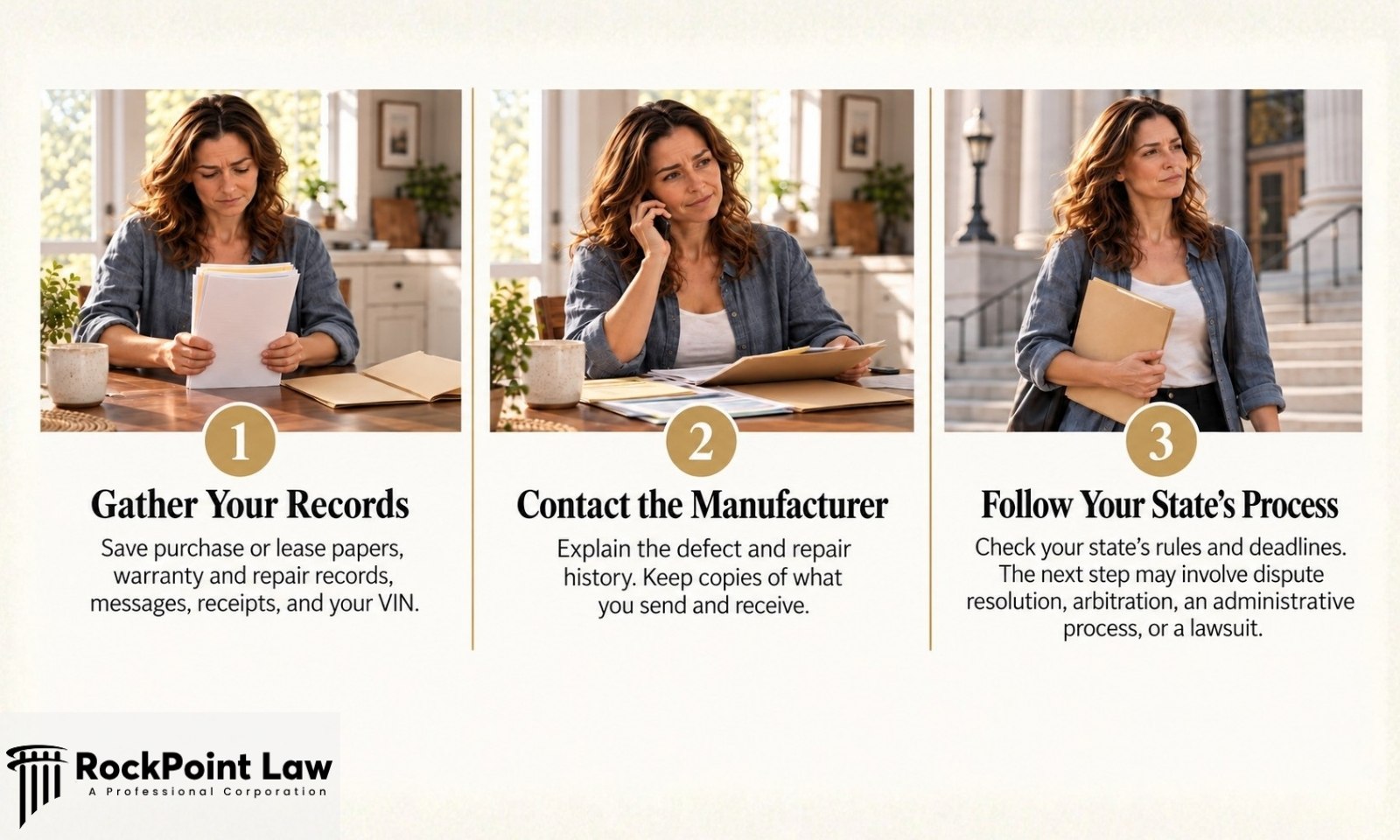
If you're considering filing a lemon claim for your vehicle, it starts with following the right steps. The exact process depends on your state, but we will highlight a general step you can follow below.
1. Gather Your Documentation
The first step is gathering your purchase or lease agreement, warranty documents, repair orders, and service records. Keep your communications with the dealer or manufacturer, including emails, letters, and text messages. Also keep receipts for related costs and your vehicle identification information, such as the VIN. These records can help show when you bought or leased the vehicle, what problems you reported, and what repairs were attempted.
2. Contact the Manufacturer
Next, contact the manufacturer and explain the vehicle's defect and repair history. Follow any claim or dispute-resolution process the manufacturer requires. Keep copies of everything you submit and any responses you receive. This gives you a record of your efforts to resolve the problem.
3. Follow Your State's Claim Process
Once you have contacted the manufacturer, follow the lemon law process that applies in your state. The process can vary. Depending on your state and circumstances, you may need to go through a manufacturer dispute-resolution program, arbitration, or an administrative process. In some cases, you may need to file a lawsuit.
Because lemon law requirements differ by state, check the applicable rules and deadlines before filing. For example, in California, the statute of limitations for a lemon law claim is generally four years, although the specific deadline can depend on the circumstances of the case. If you are unsure about the process or your rights, consider speaking with a lemon law attorney.
What Are Your Options If You Have a Lemon Car?
Are you thinking about getting rid of your lemon car? It's understandable. No one wants to be stuck with a car they cannot rely on. If you're wondering what your options are, you could pursue a lemon law claim if the vehicle qualifies. You could sell it to a private buyer or trade it in for a new one. Before making a decision, keep your repair and service records, and communicate with the dealer or manufacturer. Also review your state's lemon law requirements.
You may also have options such as a manufacturer buyback or replacement vehicle, depending on your state and circumstances. If the manufacturer refuses to resolve the problem, you can explore dispute resolution or arbitration. If that doesn't resolve it, consider speaking with a lemon law attorney. Getting legal advice can help you understand whether you have a claim and what remedies may be available to you.
RockPoint Law has spent over a decade resolving lemon law disputes for more than 1,500 vehicle owners. Our team can assess your situation, explain your options, and help you pursue a legal claim if your vehicle qualifies. If you're wondering how to get rid of your lemon car, contact us today for a free case review.
Frequently Asked Questions
Lemon laws are generally complex, so it's okay if you still have questions. Below, you can find answers to some common questions we usually encounter.
Can I Sell a Lemon Car?
Yes, you may be able to sell a defective vehicle, but you must follow any applicable disclosure requirements. This might mean disclosing known defects, the vehicle's history, or a lemon-law designation.
Can I Trade In a Lemon Car?
A dealership may accept a defective vehicle as a trade-in, but its condition can affect its trade-in value. You may also be required to disclose known defects or other information required by your state's laws.
Can I Return a Lemon Car to the Manufacturer?
If your vehicle qualifies under your state's lemon law, you may be entitled to a manufacturer buyback. Note that this only becomes an option if it is available.
Does a Car Have to Be New to Qualify as a Lemon?
Not necessarily, because some states extend lemon law protections to certain used vehicles. However, coverage and eligibility requirements for used cars vary heavily by state.
What If I Still Owe Money on My Lemon Car?
Having an outstanding auto loan does not necessarily prevent you from pursuing a lemon law claim. If a buyback is required, the loan balance will generally need to be addressed as part of the resolution.
How Many Repair Attempts Make a Car a Lemon?
There is no single number of repair attempts that applies in every state. Some states set specific repair-attempt thresholds, while others consider factors such as the seriousness of the defect and the time the vehicle has been out of service.
Disclaimer: This article is for general informational purposes only and does not constitute legal advice or create an attorney-client relationship. Lemon law requirements, deadlines, eligibility rules, and available remedies vary by state and depend on the specific facts of each case. Attorney Advertising. Prior results do not guarantee a similar outcome, and past results depend on the specific facts and circumstances of each case.