
Many states, including California, New York, New Jersey, and others, have lemon laws that apply to used cars, but the rules for eligibility, covered defects, and dealer responsibility vary by state. Lemon laws generally protect consumers who purchase defective new vehicles, while some states extend these protections to qualifying used cars. If you are buying a used car, understanding your state’s law can help you determine whether you have legal protection if the vehicle turns out to be a lemon.
At RockPoint Law, Lemon Law is not one of many options but the focus of our practice. Our attorneys handle Lemon Law cases across 49 states, recovering over $30 million for more than 1,500 vehicle owners. Founder and Managing Partner Steven Nassi brings more than 25 years of litigation experience and was recognized as a New York Metro Rising Star by Super Lawyers from 2014 through 2018. If you believe your used car may qualify as a lemon, contact us for a free case review and learn what options may be available.
This blog explains which states have lemon laws for used cars, the eligibility requirements, and protections available in each state.
What Are Lemon Laws?
Lemon laws were created to provide legal protection when a vehicle has significant defects that the manufacturer or dealer cannot repair after a reasonable number of attempts. The first lemon law was enacted in Wisconsin in 1973. Soon after, other states followed suit and introduced their own lemon laws. Later, the United States Congress passed the Magnuson-Moss Warranty Act in 1975, which provides federal protections for certain products covered by written warranties.
Most state lemon laws were initially designed to address defective new vehicles. Over time, however, states developed several rules for used cars, with some providing specific protections and others relying on warranties or other consumer protection laws. Ideally, a vehicle may qualify as a lemon when a significant defect affects its use, value, or safety and cannot be fixed after reasonable repair attempts. But the exact requirements depend heavily on your state’s laws.
Your state may consider the number of repair attempts, how long the vehicle spends in the shop, its age or mileage, and whether it is covered by a warranty. If your vehicle meets the requirements, you may have options such as a manufacturer buyback, vehicle replacement, or other legal remedies. For used cars, these protections can vary, so it is important to understand your state-specific requirements.
How Do Lemon Laws Work for Used Cars?
Buying a used car should not leave you stuck with a defective vehicle. However, the way lemon laws protect new vehicles can differ from how they protect used cars. Some states specifically provide protection for qualifying used vehicles. Others limit their lemon laws to newer vehicles or vehicles covered by certain warranties.
When considering a lemon law claim for a used car, it is important to know what warranty coverage comes with the vehicle. If the manufacturer’s original warranty is still active, a defect covered by that warranty may give you additional protection. Some states also require dealers to provide specific warranties for certain used vehicles. Others may provide protection through implied warranties.
Some states only extend their used-car protections to vehicles purchased from licensed dealers. This means that if you bought your car from a private party, you may not receive the same protection. A private seller may also have different obligations than a dealer under state law. Always check the rules that apply to your state and your specific purchase before pursuing a claim.
What Federal Laws Protect Buyers of Used Cars?
If your used car is covered by a written warranty, you may be protected by federal law. The Magnuson-Moss Warranty Act sets rules for written warranties and provides legal remedies when the warranty obligations are not met. Keep in mind that this is different from state lemon law. The Magnuson-Moss Act has its own requirements for bringing a claim. It does not create one federal lemon law for used cars. Instead, it can give you another legal option when a problem covered by the warranty cannot be properly fixed.
The Federal Trade Commission (FTC) also has rules that aim to keep you informed when buying a used car from a dealer. Under the Used Car Rule, dealers who sell or offer more than five used vehicles in 12 months must generally provide a Buyer's Guide. The Guide shows whether the vehicle is being sold with a warranty or “as is,” along with other important information about the vehicle and any warranty coverage. If a dealer fails to provide the required Guide, it may violate the FTC’s Used Car Rule, and the violation may be subject to enforcement under federal or state law.
The Guide also provides information about the vehicle’s major systems and the terms of any dealer warranty. Make sure you keep the Buyer's Guide, purchase agreement, warranty documents, and other paperwork safely after the sale. These records can help you understand what you were promised and what protections may apply if something goes wrong.
Which States Have Lemon Laws for Used Cars?
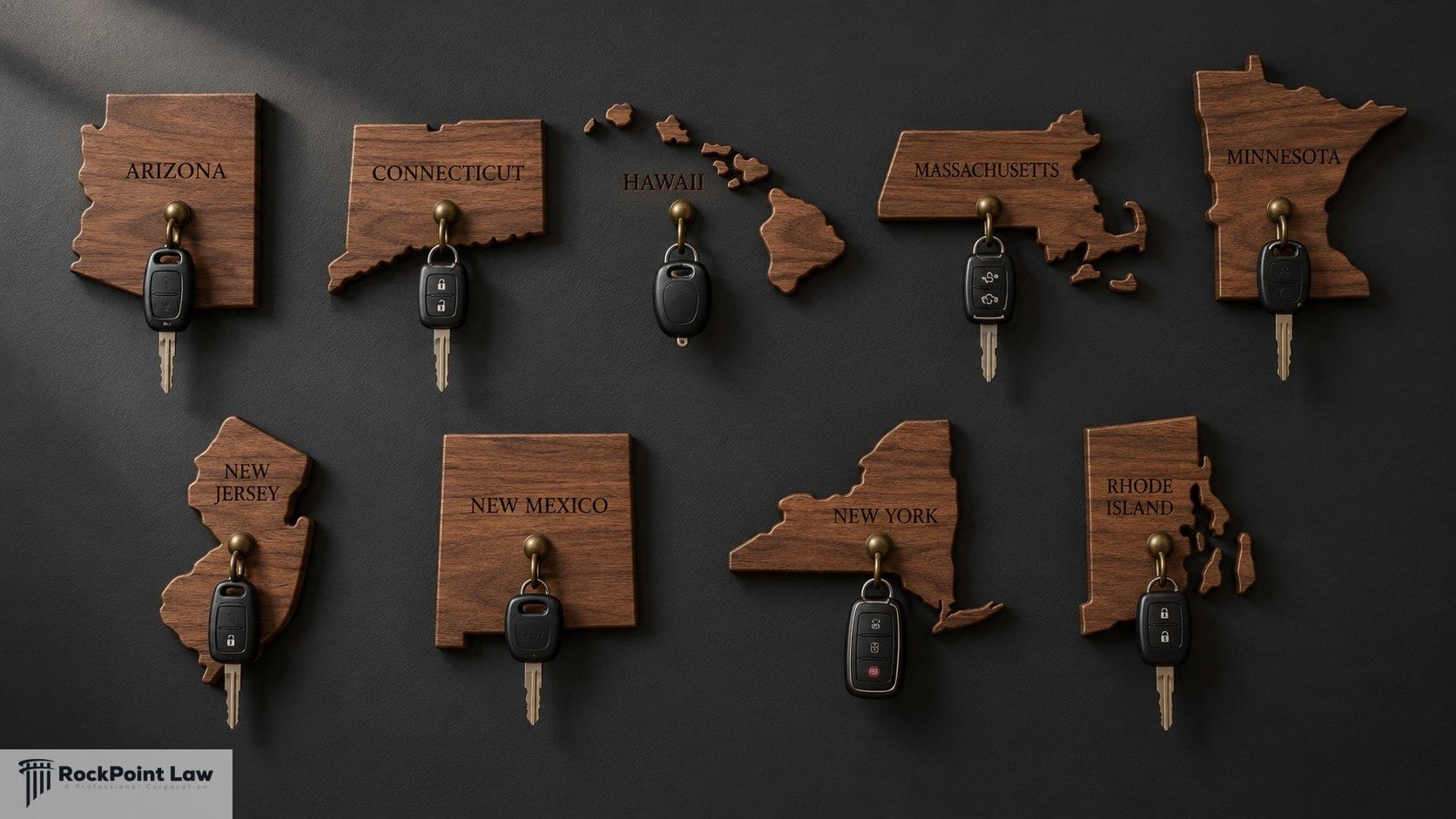
The state where you buy your used car can have a major effect on the legal protection you receive. Several states, including Arizona, Connecticut, Hawaii, Massachusetts, Minnesota, New Jersey, New Mexico, New York, and Rhode Island, have specific protections for qualifying used vehicles. However, these laws do not all work the same way. Some states have used-car lemon laws, while others rely on statutory used-car warranties that require dealers to cover certain defects for a limited period.
For example, in California, a used car may be protected by the Lemon Law if it is still covered by the manufacturer’s new-vehicle warranty. If a qualifying defect arises and the manufacturer cannot fix it after a reasonable number of repair attempts, you may be entitled to a replacement or buyback.
New York and New Jersey also have specific protections for qualifying used cars. In New York, for the law to cover your used car, it must be purchased from the dealer for at least $1,500. And it must have no more than 100,000 miles. A refund may be available if the dealer cannot fix a covered problem after three or more repair attempts or 15 days out of service. New Jersey covers qualifying used vehicles purchased from licensed dealers, with protection tied to the vehicle’s age, mileage, and purchase price.
Arizona takes a different approach. Instead of a traditional used-car lemon law, qualifying dealers must provide a warranty that protects the buyer for 15 days or 500 miles, whichever comes first. During this period, the vehicle must be free from serious defects that affect its normal use. If a covered problem comes up, the dealer must be given a reasonable opportunity to fix it.
These examples show why you should not assume used-car lemon laws work the same way everywhere. Your state may have additional requirements involving the vehicle’s warranty, age, mileage, purchase price, repair history, or how you use the vehicle. The rules above are not the only requirements you may need to meet. The table below highlights some of the key eligibility criteria for certain states.
| State | Type of Protection | Key Eligibility Requirement | Warranty/Coverage Period | Repair Requirement |
|---|---|---|---|---|
| Arizona | Statutory implied warranty | Used vehicle from a qualifying used-car dealer | 15 days or 500 miles | Dealer gets reasonable opportunity to repair |
| Connecticut | Used Car Warranty Law | Dealer purchase; vehicle ≤6 years old; $3,000+ or $5,000+ purchase price | 30 days/1,500 miles or 60 days/3,000 miles | Dealer must repair covered mechanical/operational defects |
| Hawaii | Used-car sales and warranty law | Generally dealer sale; vehicle <5 years old, $1,500+, 12,000–74,999 miles | 90/5,000, 60/3,000, or 30/1,000 miles depending on mileage | Dealer must reasonably attempt to correct covered defects |
| Minnesota | Used Car Warranty Law + Lemon Law | Generally dealer purchase; mileage and use restrictions apply | 60/2,500, 30/1,000, or 15/500 miles depending on mileage | Dealer must repair covered parts; Lemon Law has separate repair standards |
| New Jersey | Used Car Lemon Law | Licensed dealer; ≤7 model years; ≤100,000 miles; $3,000+ | 90/3,000, 60/2,000, or 30/1,000 miles | Three attempts or 20 cumulative days out of service |
| New Mexico | Statutory implied warranty | Qualifying used-car dealer sale | 15 days or 500 miles | Dealer gets reasonable opportunity to repair |
| New York | Used Car Lemon Law | Dealer purchase; $1,500+; <100,000 miles; primarily personal use | 90/4,000, 60/3,000, or 30/1,000 miles | Three attempts or 15 days out of service |
How Used-Car Lemon Laws Vary by State
Lemon laws for used cars can be different depending on where you bought the vehicle. One state may consider age, mileage, or purchase-price limits, while another may focus more on your warranty coverage.
The law may also specify which parts are covered and how many repair attempts you must allow. In some states, it may be the number of days your car spends in the shop that can determine your claim. Some protections apply only to personal-use vehicles or cars bought from licensed dealers, rather than private sellers.
The person responsible for fixing the problem can also vary. Some laws require the dealer to handle repairs, while others may involve the manufacturer through the vehicle’s original warranty. You may also have to follow a specific arbitration or dispute-resolution process before taking legal action.
Depending on the law, the available remedy could include repairs, a replacement vehicle, a refund, or other compensation. The point is that used-car lemon law requirements vary from state to state. So, make sure you understand your state’s requirements before pursuing a claim.
What If Your State Does Not Have a Used-Car Lemon Law?
Your state not having a specific used-car lemon law does not exclude you from legal protection. You may still have rights under a manufacturer or dealer warranty, an implied warranty, or the Magnuson-Moss Warranty Act. Federal protections from the FTC may also apply, depending on how the vehicle was sold. Your state may also have laws that protect you from deceptive business practices, fraud, misrepresentation, or the failure to disclose known vehicle defects.
To understand your options, start by reviewing your purchase agreement, warranty documents, and Buyer's Guide. These documents can show what the dealer or manufacturer promised and what protections apply to your vehicle. You should also check your state’s laws before deciding what to do next. Even without a used-car lemon law, you may have other options if the vehicle has a serious defect or the seller failed to disclose an important problem.
What Should You Do If Your Used Car May Be a Lemon?
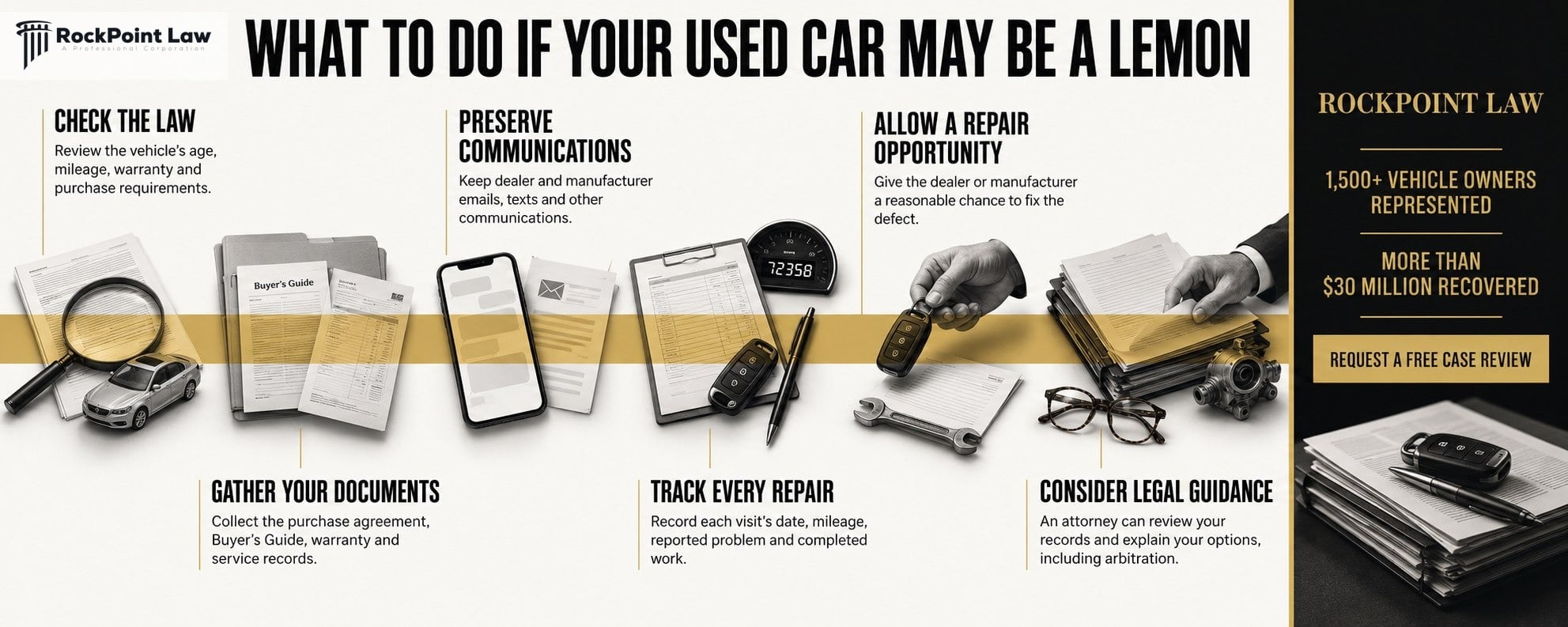
Start by checking the law that applies to your used car. Look at the vehicle’s age, mileage, warranty coverage, and purchase requirements. These details can determine whether your vehicle qualifies and what steps you need to take. You should also have your purchase agreement, Buyer’s Guide, warranty documents, repair orders, and service invoices handy.
Keep any emails, texts, or other communications with the dealer or manufacturer. Write down the date and mileage for each repair visit, along with the problem you reported and the work performed. Many state laws require you to give the dealer or manufacturer a reasonable opportunity to fix the problem. Avoid making unnecessary repairs yourself without first understanding how they could affect a potential claim.
If you are unsure about your options, consider speaking with a lemon law attorney. An attorney can review your warranty, repair records, and purchase documents to determine whether your vehicle may qualify. If your state requires arbitration or another dispute-resolution process, they can also help you understand what to expect. Legal advice can be especially useful when your vehicle has serious defects or the dealer refuses to resolve the problem.
At RockPoint Law, we can review the details of your situation and help you understand whether you may have a valid claim. Our attorneys have represented more than 1,500 vehicle owners and recovered over $30 million in settlements and verdicts. If you believe your used car may qualify for protection, contact us for a free case review and learn what options may be available.
Frequently Asked Questions
Pursuing a lemon law claim for a used car can be confusing. Here are answers to some of the most common questions people have about used-car lemon laws.
Which States Have Lemon Laws for Used Cars?
Several states, including California, New York, New Jersey, Arizona, and others, provide specific protections for qualifying used vehicles. However, the kind of protection, eligibility requirements, and available remedies vary by state.
Can a Used Car Sold “As-Is” Qualify Under a Lemon Law?
A vehicle that was sold “as-is” can limit certain protections, but it does not automatically prevent every legal claim. Whether you still have protection depends on your state’s law, any existing warranty, and the circumstances of the sale.
Do Used-Car Lemon Laws Apply to Private Sales?
Private-party sales may have fewer protections, although other state laws may still apply in cases involving fraud, misrepresentation, or failure to disclose certain defects.
Does a Used Car Have to Be Under Warranty to Qualify?
Some used-car protections require the vehicle to be covered by a warranty, while others provide statutory protection even without one. Your state’s law, the vehicle’s warranty, and the terms of your purchase can determine whether you qualify.
How Many Repair Attempts Are Required for a Used-Car Lemon Law Claim?
There is no single number that applies to every state or used-car claim. Some laws consider multiple repair attempts, while others also look at how many days the vehicle has been out of service.
Disclaimer: Attorney Advertising. This article is provided for general informational purposes only and does not constitute legal advice. Lemon laws and other consumer protection laws vary by state, and the information in this article may not apply to your specific situation. Reading this article does not create an attorney-client relationship with RockPoint Law. You should consult a qualified attorney about your specific circumstances before taking legal action.
