Maryland Lemon Law

Lemon Law Lawyers in Maryland

At RockPoint Law, lemon law is the whole practice. We act for Maryland drivers whose new vehicle keeps going back to the dealer for the same fault, whether that is a stall in the Fort McHenry Tunnel at rush hour or a steering warning that reappears every time the car comes off the lift in Rockville. Maryland gives you a real remedy for that, and it works differently from most states: there is no state arbitration board to apply to. A Maryland claim starts with a certified letter to the manufacturer and ends, if it has to, in the District Court of Maryland.

All 24 Maryland jurisdictions 30 days for the manufacturer to fix it No fee unless we recover

Free Case Evaluation

Three quick questions. No cost, no obligation.

  • The year and make of your vehicle
  • What the dealer has already tried
  • How to reach you, and we review it
Get My Free Case Evaluation →

Sending this does not create an attorney-client relationship. A case evaluation is a first step, not legal representation.

The Short Answer

The Maryland Lemon Law, in Brief

Yes, Maryland has a lemon law. It is the Automotive Warranty Enforcement Act, and if a warranty defect on your new vehicle survives four repair attempts, or keeps the car off the road for thirty days, the manufacturer has to replace it or buy it back, and you choose which. Maryland has no state arbitration board. You start by writing to the manufacturer by certified mail, and it then has thirty days to put the car right.

The statute is the Maryland Automotive Warranty Enforcement Act, Md. Code Ann., Commercial Law section 14-1501 through section 14-1504. Four sections, and that is the whole of it. The first thing to understand about a Maryland claim is that the opening move belongs to you and it has to be in writing. Section 14-1502(b)(1) says the consumer shall report the defect to the manufacturer or factory branch by certified mail, return receipt requested, and not to the dealer, not by email, not over the phone. Once the manufacturer receives that letter, section 14-1502(b)(3) gives it thirty days to correct the defect, and the repair obligation holds even if the work happens after the warranty period has run out. The return receipt matters more than people realize, because the green card is what dates the start of those thirty days.

The window for all of this is the manufacturer's warranty period, which section 14-1501(e)(1) defines as the earlier of 24 months from delivery or the first 18,000 miles of operation. Maryland gives you more months than Massachusetts and fewer miles than Georgia. Those are current figures rather than historic ones, and the distinction matters because the old ones are still circulating: Maryland ran on 15 months and 15,000 miles until the General Assembly raised it, effective 1 October 2009 by 2009 Md. Laws ch. 512. If a page quotes you fifteen of anything for Maryland, it is seventeen years out of date. There are three ways to show the manufacturer has had enough attempts, under section 14-1502(d), and any one is enough: the same defect repaired four or more times and still there, the vehicle out of service for a cumulative thirty days or more for one or more defects, or a braking or steering failure that survives one repair and still leaves the car failing Maryland's safety inspection. You do not have to reach four repairs or thirty days before you write, either: the Attorney General says so in terms.

Maryland has no state-run arbitration, which is the single biggest difference between Maryland and its neighbors. What exists instead is the manufacturer's own complaint program, and section 14-1502(i)(1) makes it optional, because the statute says a consumer "may" use it and never must. The Attorney General's Consumer Protection Division puts the consequence plainly: the arbitrator's decision is binding only on the manufacturer, not on you, and if you do not like the outcome you can still sue. The Division itself does not arbitrate. It takes your complaint, contacts the manufacturer and helps you negotiate, and because section 14-1504(a) makes any violation an unfair or deceptive trade practice, it also holds real enforcement power in reserve.

The law reaches a vehicle registered in Maryland as a passenger car, a motorcycle, a truck of three-quarter-ton rated capacity or less, or a multipurpose vehicle. Motorcycles are in by name, which puts Maryland in the minority of states. Motor homes are out. There is no pound figure anywhere in the statute, so any page quoting you a gross-weight limit for Maryland is quoting another state. The Act is a new-vehicle statute, though the rights pass to a later owner for the rest of the warranty period, and a purchase of five or more vehicles falls outside it altogether. The Attorney General's Consumer Protection Division states that leased vehicles are covered; the statute gets there through the broad definition of "consumer" in section 14-1501(b)(3) rather than by using the word lease.

Where the state Act does not reach, the federal Magnuson-Moss Warranty Act often still does, it has no mileage or age cap, and it lets a consumer who finally prevails recover attorney fees. Which route fits your vehicle is the first real decision in a Maryland claim: the state Act if the vehicle is in one of the four registration classes and still inside 24 months and 18,000 miles, the federal Act if it is not. Our guide to how to file a lemon law claim sets out the paperwork order, and the lemon law glossary explains the vocabulary.

If your vehicle keeps failing anywhere in Maryland, our team can read your repair history and tell you which test it meets.

Schedule a Free Case Evaluation →
Eligibility

What Qualifies for the Lemon Law in Maryland?

Maryland spells out when the manufacturer has had a reasonable number of attempts to fix your vehicle. Section 14-1502(d) sets three routes and any one of them is enough on its own. All three have to happen inside the warranty period, the 24 months or 18,000 miles that start on delivery. Maryland does have a one-repair route, but it is narrower than most drivers are told: it has three elements, and leaving one of them out is the most common mistake made about Maryland law.

One Repair, Braking or Steering Only

Maryland's shortcut is real and it is specific. Section 14-1502(d)(3) needs three things together: a failure of the braking or steering system, subject to the same repair at least once inside the warranty period with the manufacturer notified and given the chance to cure, and a vehicle that afterwards still does not comply with Maryland's motor vehicle safety inspection laws. That third element is the one most often left out, and the route does not work without it. Georgia's equivalent covers any serious safety defect after one repair. Maryland's covers two systems, and only if the car would still fail inspection.

A Maryland example Power steering that cuts out on the Capital Beltway, comes back from the dealer once, does it again, and would not pass a Maryland safety inspection in that condition

Four Repairs of the Same Defect

The same nonconformity goes back for repair four or more times and still exists, under section 14-1502(d)(1). Four is the highest ordinary threshold of the three states we cover, because Georgia asks three and Massachusetts asks three. But four is not a wall: section 14-1502(d) creates a presumption, not a prerequisite. The duty in section 14-1502(c)(1) bites when the manufacturer cannot fix the car "after a reasonable number of attempts," and the Attorney General says plainly that you do not need to wait for the fourth visit before writing.

A Maryland example A new SUV back at a Towson dealer four times for the same transmission shudder, still shuddering at 12,000 miles

Thirty Days Out of Service

The vehicle is off the road for repairs for a cumulative thirty days inside the warranty period. Section 14-1502(d)(2) says one or more nonconformities, so unlike the four-repair route the days do not have to be for the same defect. And Maryland counts calendar days, because the words "business day" appear nowhere in the whole subtitle, so weekends and holidays in the shop count against the manufacturer. Do not confuse this thirty days with the thirty days the manufacturer gets to cure after receiving your letter. Two different thirties in one statute.

A Maryland example A pickup that sits at a Hagerstown service department across three visits for three unrelated faults and passes thirty days in total

Inside the Warranty Period, and Inside Three Years

Two dates doing different jobs, and both run from the day the vehicle was delivered to you. The warranty period is 24 months or 18,000 miles, whichever is earlier, and the defect has to appear inside it. Then section 14-1502(k) gives you three years from that same delivery date to file suit. Do the arithmetic and the problem shows itself: if the warranty period runs its full 24 months, you may have only twelve months left to sue.

A Maryland example A fault first written up at 17,400 miles on a car that commutes I-270 daily and will pass 18,000 within the fortnight

Meeting a test starts the analysis rather than finishing it, and in Maryland the next step is the letter. Written notice to the manufacturer or factory branch, certified mail with return receipt requested, and then thirty days. The manufacturer also has two affirmative defenses ready under section 14-1502(c)(3): that the defect does not substantially impair the use and market value of the vehicle, and that it results from abuse, neglect or unauthorized modifications. That conjunction is narrower than it looks, and narrower than the Massachusetts test. Because all of this turns on records, keep every repair order, service invoice, and purchase or lease agreement from your Maryland dealership, with the drop-off and pick-up dates on each one. A second paper trail runs alongside yours, and it is not yours to keep. Under section 14-1502(f)(1) your dealer has its own duty to notify the manufacturer within seven days once the car comes in a fourth time for the same fault, or once it has been out of service twenty days, and to copy the MVA. If the dealer never did it, that failure cannot be held against you.

Not sure whether your repair history clears one of the tests? Send it over for a straight read.

Get a Free Case Evaluation →
Where Your Case Is Heard

Filing From Maryland: The Letter, the Courts, and the Deadlines

The question we hear most from Maryland drivers is which agency to apply to. The answer is none, and that surprises people. Maryland is not a state-arbitration state. There is no board, no certification scheme and no application form to send to Annapolis. A Maryland claim is a letter and, if the letter does not work, a lawsuit, and the General Assembly wrote the lemon law into its District Court jurisdiction statute by name. Your letter starts a thirty-day clock, and a separate three-year clock has been running since the day the car was delivered to you.

It Starts With Certified Mail, Not a Form

Section 14-1502(b)(1) puts the opening obligation on the consumer: report the defect to the manufacturer or factory branch, in writing, by certified mail, return receipt requested. Not the dealer. Not email. The manufacturer then has thirty days from its receipt to correct the defect under section 14-1502(b)(3), and it may authorize the dealer to do the work. Keep the return receipt, because it dates the thirty days and without it you are arguing about when the clock started. The Attorney General publishes three model letters for exactly this, and all three are headed for certified mail.

There Is No State Arbitration Board, and That Is Deliberate

Georgia routes lemon law claims through its Attorney General's arbitration program; Massachusetts appoints state-certified arbitrators. Maryland does neither, and it is not an accident. When the General Assembly raised the rights period in 2009, the same Act set up a task force and asked it to study whether a state-run arbitration program should be created for exactly these disputes. Seventeen years on, there still isn't one. Section 14-1502(i)(1) offers only the manufacturer's own procedure, and only if the consumer "may" choose it, never must. Section 14-1502(i)(2) confirms that using one forfeits nothing. The Attorney General states the asymmetry plainly: that arbitrator's decision is binding only on the manufacturer, not on you.

The Consumer Protection Division Mediates, and Enforces

The Attorney General's Consumer Protection Division is not an arbitrator, and expecting it to be one costs people time. What it does is take your complaint, contact the manufacturer and help you negotiate a refund or replacement. What it also holds, quietly, is a stick: section 14-1504(a) makes a violation of the Act an unfair or deceptive trade practice under Title 13, which brings cease-and-desist and restitution orders and civil penalties of up to $10,000 a violation, rising to $25,000 for a repeat, under section 13-410.

The District Court, by Name

Maryland names the lemon law in its court-jurisdiction statute, which almost no state does. Courts and Judicial Proceedings section 4-401(16) gives the District Court of Maryland exclusive original civil jurisdiction over "a proceeding for a replacement motor vehicle under section 14-1502(c)(1)(i)", which is the lemon law, named in the jurisdiction statute. Section 4-402(d)(3) then lets the plaintiff elect District or circuit court for that claim anyway. The District Court sits in 33 locations across 12 districts, so there is one near you wherever in Maryland you live.

The amount you claim decides the courthouse

For an ordinary refund or damages claim, rather than a replacement proceeding, section 4-401(1) gives the District Court exclusive original jurisdiction where damages do not exceed $30,000, excluding interest, costs and recoverable attorney fees. Section 4-402(d)(1)(i) lets you elect a court of general jurisdiction once the amount in controversy passes $5,000. The District Court's own description puts it the same way: exclusive below $5,000, concurrent with the circuit courts from there up to $30,000.

The amount also decides whether a jury can ever see the case. The District Court of Maryland holds no jury trials. Section 4-402(e)(1) bars a jury demand where the amount in controversy does not exceed $25,000; above that, a timely demand moves the case to a circuit court. That choice is made when the claim is filed rather than later.

Federal court is the exception, not the rule

A warranty suit under the federal Magnuson-Moss Act can be filed in any state court of competent jurisdiction under 15 U.S.C. section 2310(d)(1)(A), and section 2310(d)(3) keeps it out of federal court unless the amount in controversy reaches $50,000 exclusive of interests and costs. Most single-vehicle claims do not get there, so the federal count usually rides along in a Maryland state court, where the fee-shifting in section 2310(d)(2) applies just the same.

When a manufacturer can make you use its own program first

The state claim and the federal claim do not share a front door. Section 2310(a)(3) lets a warrantor make its own compliant dispute procedure a prerequisite to a Magnuson-Moss suit where the written warranty says so. Maryland's state claim carries no exhaustion requirement at all. So two counts in the same case can sit on different footings, and which one you lead with is a real choice rather than a formality.

Three years, counted from delivery

The deadline is where Maryland is least forgiving. Section 14-1502(k) says an action under the section shall be commenced within three years of the date of original delivery of the vehicle to the consumer. Not three years from discovery, not from the last repair attempt, not from the day the manufacturer refused. From delivery.

Since the warranty period itself can run a full 24 months, a driver who uses all of it and then takes a few months to decide can be left with very little of that third year. The deadline also lives in section 14-1502(k), not (f) — subsection (f) is the MVA-notification provision, and the two get mixed up constantly.

Fees: weaker here than next door

Section 14-1502(l)(1) says a court may award reasonable attorney fees to a prevailing plaintiff. "May," not "shall," and only to a plaintiff, because a prevailing manufacturer gets nothing under that subsection. Section 14-1502(l)(2) adds a two-way backstop for actions brought in bad faith or that are frivolous.

The two other routes to your fees, and the bad-faith damages

section 13-408(b) lets a Consumer Protection Act plaintiff who is awarded damages also be awarded reasonable fees, and it is reachable here because section 14-1504(a) makes a lemon law violation a Title 13 violation. 15 U.S.C. section 2310(d)(2) is the third route, on the federal count.

There is one more number. Under section 14-1504(b), a manufacturer, factory branch or distributor found to have acted in bad faith may be ordered to pay you damages of up to $10,000 on top of everything else.

Not sure which of those routes fits your vehicle? We sort that out in the first conversation, at no cost.

  • Bring your repair orders and the dates. That is usually enough to see which of Maryland's three tests your record meets.
  • You speak with the people who would work the file, not an intake desk.
  • Maryland counts its three years from the day the car was delivered to you, not from the day it started failing. Timing matters.

Pick a time to the right and we can confirm it.

Pick a time that suits you

Video call or phone, wherever you are in Maryland. Tell us when and we can confirm it.


    A Maryland driver on the phone at home while a certified-mail lemon law notice is prepared and sent to the manufacturer for them
    You Stay Put

    Most of a Maryland claim happens on paper

    People hear "no state arbitration" and assume that means a courtroom from day one. It does not. The overwhelming majority of a Maryland claim is correspondence: the certified letter to the manufacturer, the thirty days, the repair record, the negotiation, and a complaint to the Consumer Protection Division if the manufacturer will not move. Most Maryland claims resolve without anyone filing anything.

    We draft the notice and send it the way section 14-1502(b)(1) requires, track the thirty days from the return receipt, assemble the repair history, count the days out of service, deal with the manufacturer, and file in the right District Court district if it comes to that. Your part is the phone call that starts it.

    Start from home →
    How It Works

    The Lemon Law Process for a Maryland Driver

    A Maryland claim has a different shape from most states' because there is no agency to apply to. What there is instead is a letter with legal consequences, a thirty-day clock that starts when the manufacturer signs for it, and a three-year deadline that runs from a date in the past. Five steps, in the order a Maryland claim actually runs. For the form-by-form walkthrough, our guide to how to file a lemon law claim goes through each document in order.

    Sculpted marble figure reviewing an open warranty booklet, checking a vehicle against the 24-month, 18,000-mile Maryland warranty period

    Check the Vehicle Is Covered

    Maryland draws coverage by registration class, which trips people up. Section 14-1501(f)(1) reaches a vehicle registered in Maryland as Class A passenger, Class D motorcycle, Class E truck of three-quarter-ton or less rated capacity, or Class M multipurpose. Motor homes are out by name. There is no pound figure in the statute at all, so a gross-weight limit you read elsewhere is another state's rule. It is a new-vehicle Act, though section 14-1502(j)(2) passes the rights to a later owner for the rest of the warranty period, and section 14-1502(m) excludes a purchase of five or more vehicles. If your vehicle falls outside all that, the claim moves to Magnuson-Moss rather than stopping.

    Sculpted marble figure stacking repair orders on a service counter, the paper trail a Maryland four-repair count is built from

    Document Every Repair Attempt and Every Day Off the Road

    Maryland counts repairs of the same defect and days out of service separately, so the paperwork has to support both counts. Every time the vehicle goes into a Maryland service department, get a repair order that names the complaint, the drop-off date, the date you collected it and what the shop did. The dates build the thirty-day total, and because the statute never says "business day," weekends in the shop count. Keep an eye on your dealer too: once the car comes in a fourth time for the same fault, or has been out of service twenty days, section 14-1502(f)(1) obliges the dealer to notify the manufacturer within seven days and copy the MVA.

    Sculpted marble figure holding out a sealed certified letter with a return receipt, the notice Maryland law requires be sent to the manufacturer

    Send the Certified Letter

    This is the step Maryland has and Massachusetts does not, and skipping it is the most common way a good Maryland claim gets weakened. Section 14-1502(b)(1) requires written notice to the manufacturer or factory branch, not the selling dealer, by certified mail, return receipt requested. The Attorney General publishes three model letters: one for a car that is not yet a lemon, one for first contact when it is, and one for a follow-up. Include the year, make, model and VIN, the dealership and purchase date, a description of the problem, and copies of the repair orders. Keep the return receipt. It is the document that proves when the next clock started.

    Sculpted marble figure at a service bay watching a calendar, the manufacturer's 30 days to correct the defect after receiving a Maryland lemon law notice

    The Manufacturer's Thirty Days

    Section 14-1502(b)(3) gives the manufacturer thirty days from its receipt of your letter to correct the defect, and it may authorize a dealer to do the work. Two things in that subsection favor you. The repair has to be at no charge, and the obligation holds even if the repairs happen after the warranty period has expired, so a letter sent late in the period does not become worthless when the period closes. If the thirty days pass and the defect is still there, section 14-1502(c)(1) puts the choice in your hands: a comparable replacement acceptable to you, or a refund. The manufacturer does not get to pick.

    Two sculpted marble figures before a bench in the District Court of Maryland, where a lemon law replacement claim is heard

    Negotiate, Then File

    If the manufacturer refuses, there are three places to go and they are a sequence rather than alternatives. You may use the manufacturer's own arbitration program, and section 14-1502(i)(1) makes that entirely optional and costs you nothing if it fails. You may file a complaint with the Attorney General's Consumer Protection Division, which will contact the manufacturer and help you negotiate. And you may sue, in the District Court of Maryland, which Courts and Judicial Proceedings section 4-401(16) gives exclusive original jurisdiction over a lemon law replacement claim, or in circuit court if you elect it under section 4-402(d)(3). The deadline is the one to watch: three years from original delivery, under section 14-1502(k).

    Each of those five steps is a place a Maryland claim comes apart: a repair order that never named the defect, a notice letter posted to the selling dealer instead of the manufacturer, a notice sent by email so nobody can prove when the thirty days began, a thirty-day out-of-service count built on business days, a suit filed three years and a month after the car was delivered. The certified letter is the step that carries the most weight for the least effort, and it is the one most often skipped.

    You can run this yourself, and some Maryland drivers do. The catch is that you would be learning the clock while the other side is already running it. No one can promise a result, and anyone who does is telling you something they cannot know. What a firm that handles these claims can do is keep the record clean and the dates intact.

    Outcomes

    What Compensation Can You Receive?

    When a Maryland claim succeeds, section 14-1502(c)(1) gives the choice to the consumer, not the manufacturer: a comparable motor vehicle acceptable to you, or the manufacturer accepts the car back and refunds. That replacement wording is doubly protective. The vehicle has to be comparable and acceptable to you, so a manufacturer cannot discharge the duty with something it has decided on its own is close enough.

    The refund is the full purchase price including all license fees, registration fees, and any similar governmental charges, and then two deductions, no more. Section 14-1502(c)(1)(ii) allows a reasonable allowance for use of the vehicle, and a reasonable allowance for damage not attributable to normal wear, which expressly does not include damage caused by the defect itself.

    Maryland has no mileage formula, and that is the figure reported wrongly more often than any other. There is no divide-by-100,000, no divide-by-120,000, and no threshold mileage excluded before the meter starts. The use deduction is one flat limit: no more than fifteen per cent of the purchase price. On a $40,000 car, the manufacturer may not take more than $6,000 for your use of it, and it has to justify whatever it does take as reasonable. If you have read a per-mile Maryland formula somewhere, you were reading another state's rule.

    Two more things belong in the arithmetic. Your excise tax does not come back from the manufacturer at all. Section 14-1503 entitles you to recover it from the Motor Vehicle Administration, either as cash or as a credit against the tax on a replacement vehicle, prorated to whatever portion of the price was actually refunded. And section 14-1503(c) puts an affirmative duty on the manufacturer or dealer to tell you in writing that you are entitled to it, a duty that gets ignored routinely. Separately, the statutory refund list does not itemize freight, dealer-installed options, finance charges, towing or rental costs. Those may be recoverable by other routes, and section 14-1502(h) expressly preserves every other remedy, but they are not part of the statutory buyback, and we would rather tell you that now than after you have counted on it.

    On fees, Maryland is honest rather than generous. Section 14-1502(l)(1) says a court may award reasonable attorney fees to a prevailing plaintiff, which is discretionary rather than automatic, and it is the weakest of the three fee provisions we deal with regularly. A Consumer Protection Act count under section 13-408(b) and a federal count under 15 U.S.C. section 2310(d)(2) both open further fee routes, and section 14-1504(b) lets a court award up to $10,000 where a manufacturer, factory branch or distributor acted in bad faith.

    Outcomes depend on the specific facts of each case, so no attorney can promise a particular result.

    Possible Outcomes

    Replacement

    a comparable vehicle that has to be acceptable to you, not merely to the manufacturer

    Repurchase

    full purchase price plus license, registration and similar governmental charges, less a use allowance capped at 15 per cent

    A corrected vehicle

    where the manufacturer's thirty days after your certified letter actually fixes the defect

    Excise tax

    refunded or credited by the Motor Vehicle Administration under section 14-1503, not by the manufacturer

    Fees and bad-faith damages

    section 14-1502(l)(1) fees at the court's discretion, and up to $10,000 more under section 14-1504(b)

    Vehicles We Handle

    Which Vehicles the Maryland Statute Reaches, and Which It Does Not

    Maryland defines coverage in a way no neighboring state does: by the class the vehicle is registered in, not by describing the vehicle. Section 14-1501(f)(1) reaches four classes and excludes motor homes, and there is no weight figure anywhere in the statute. That makes Maryland broader than Georgia in one place and narrower in another. Where the Act does not reach, the federal Magnuson-Moss Warranty Act, 15 U.S.C. section 2301 and following, has no vehicle-type exclusions at all. Pick a category to see where it stands.

    Cars, Station Wagons and Multipurpose Vehicles

    Covered. Class A takes every passenger car and station wagon under Transportation section 13-912(a), and Class M takes every multipurpose passenger vehicle. "Station wagon" does not appear in section 14-1501 itself. It arrives through the registration class, which is why both sections matter. See our practice areas.

    Trucks, and the Limit That Is Not a Weight

    Class E trucks are covered up to three-quarter-ton manufacturer's rated capacity. That is a capacity rating assigned by the manufacturer, not a registered gross weight, and there is no pound figure in the Maryland statute: no 10,000, no 12,000, no 15,000. Georgia draws its line at 12,000 pounds GVWR. Maryland does not draw it in pounds at all. Derate and DEF faults on a heavier truck still support a federal claim. See our diesel emissions lemon law guide.

    Motorcycles

    Covered by name. Section 14-1501(f)(1)(ii) lists Class D, and Transportation section 13-915(a) makes every motorcycle a Class D vehicle. That puts Maryland in the minority of states whose lemon law reaches motorcycles, and it is a straight contrast with Georgia, which excludes them outright. See our motorcycle lemon law guide.

    RVs and Motorhomes

    Excluded. Section 14-1501(f)(2) says a motor vehicle "does not include a motor home," with no chassis-only carve-in of the Georgia kind. Towable trailers and campers fall outside the four registration classes independently. A defective motorhome in Maryland is a Magnuson-Moss, express warranty and Consumer Protection Act case, and notice has to go to every known manufacturer. See our RV and motorhome lemon law guide.

    Used and Fleet Vehicles

    The Act is a new-vehicle statute. A used car reaches it only if the original delivery was less than 24 months and 18,000 miles ago and you qualify as a consumer under section 14-1501(b), in which case section 14-1502(j)(2) carries the rights to you for the rest of the warranty period. A purchase of five or more vehicles is outside the subtitle entirely under section 14-1502(m), and the test is the size of that purchase rather than the size of your fleet. Any agreement waiving these rights is void under section 14-1502(j)(1).

    Electric Vehicles

    Covered on the same terms as any other new vehicle in a listed class. Battery, charging, drive-unit and software faults are the defect patterns we see most. Maryland has a genuine stake here too: Volvo Group builds modular power boxes for battery-electric trucks at its Hagerstown powertrain plant. See our electric vehicle lemon law guide.

    Why RockPoint

    Why Maryland Drivers Choose RockPoint Law

    Lemon law and consumer warranty work is the whole of our practice. We act for drivers across Maryland, and because a Maryland claim is built on a certified letter, a repair record and a filing deadline rather than on an agency queue, the work runs the same way whether you are in Cumberland or Salisbury.

    Lemon Law Is the Whole Practice

    This is not a side practice. Warranty and lemon law is what we do, day in and day out, for drivers with defective vehicles.

    All 24 Jurisdictions, Not Just the Baltimore-Washington Corridor

    Maryland has 23 counties and Baltimore City, and the District Court sits in 33 locations across 12 districts. We take cases from Cumberland to Salisbury, not only from inside the Beltways.

    We Know What Maryland Requires in Writing

    Certified mail to the manufacturer, not the dealer. Return receipt, because it dates the thirty days. Four repairs, or thirty calendar days, or a braking failure that still fails inspection. Three years from delivery. We draft the letter and run the clocks.

    Clear Communication

    Straight updates at every stage of your case. No silent stretches and no surprises.

    No Upfront Legal Fees

    Qualifying cases run on contingency. You do not pay a fee unless we recover for you, which matters more in Maryland than in states that make the manufacturer pay fees automatically.

    Side-by-Side

    Handling a Maryland Claim Alone vs With an Attorney

    Flip the switch to see the same four moments from both sides.

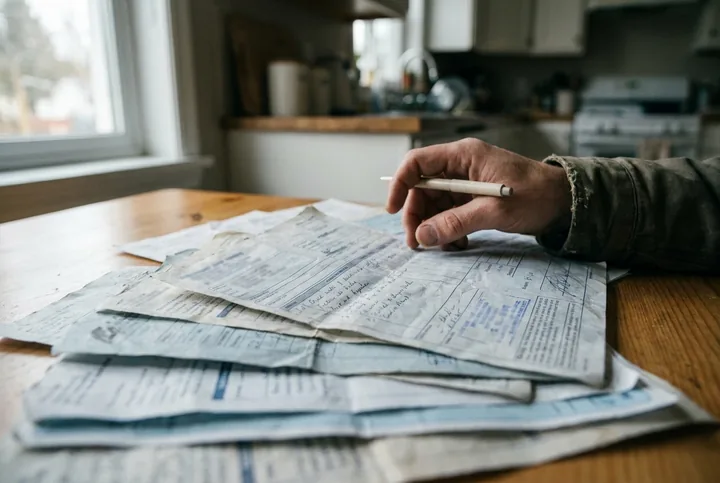
    Vehicle repair invoices spread across a kitchen table with a hand hovering over them
    On your own1 / 4

    Complaining to the dealer, and never sending the notice the statute requires

    Section 14-1502(b)(1) puts the obligation on the consumer and it is specific about the form: written notice to the manufacturer or factory branch, by certified mail with return receipt requested. A year of conversations with a service adviser feels like notice and is not. Worse, without the green card there is nothing to date the manufacturer's thirty days from, so the one clock that is running in your favor never provably starts.

    A person on the phone at a home desk with a notepad of call notes
    On your own2 / 4

    Assuming a single brake repair makes the car a lemon

    This is the most repeated error about Maryland law anywhere online. Section 14-1502(d)(3) has three elements, not one: braking or steering and nothing else, one repair with the manufacturer notified and given the chance to cure, and a vehicle that still does not comply with Maryland's safety inspection laws afterwards. Building a claim on the first element alone means discovering the other two from the other side's brief.

    A wall calendar with deadline dates circled in red beside a set of car keys
    On your own3 / 4

    Expecting the Attorney General to arbitrate it

    The Consumer Protection Division mediates. It contacts the manufacturer, it helps you negotiate, and it can enforce under Title 13, but it does not decide your case and no state board exists to do it instead. Months spent waiting for a determination that was never coming are months off the three years section 14-1502(k) allows, and that clock started the day the car was delivered.

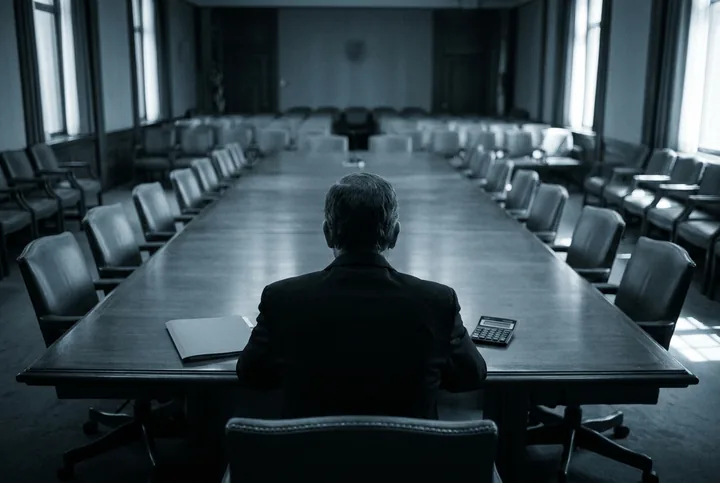
    One person alone at the end of a long empty hearing room table
    On your own4 / 4

    Counting on a per-mile offset, then being surprised by the deduction

    Maryland has no mileage formula at all. Section 14-1502(c)(1)(ii)1 caps the use allowance at fifteen per cent of the purchase price and says nothing else about how to calculate it. A consumer expecting a per-mile figure has no way to tell whether what the manufacturer has taken is reasonable, which is the only question the statute actually asks.

    Hands working through an organized stack of repair orders with a highlighter and index tabs
    With RockPoint Law1 / 4

    Certified mail to the manufacturer, and the receipt that dates the thirty days

    We draft the notice to the manufacturer or factory branch, send it the way section 14-1502(b)(1) requires, and keep the return receipt. After that the manufacturer deals with us rather than with you, and the thirty days are on the record.

    A certified mail envelope and return receipt card being prepared on a desk
    With RockPoint Law2 / 4

    All three elements of the braking and steering route established, or a different route taken

    We read the repair orders against all three parts of section 14-1502(d)(3), including the inspection element, before anyone relies on it. Where the record does not carry that route, the four-repair or thirty-day presumption usually does, and we take the one the paperwork supports.

    An open case planner with color-coded deadline tabs being marked
    With RockPoint Law3 / 4

    Negotiation with the manufacturer, and the right District Court district if it is needed

    We date the three years from the original delivery rather than from memory, negotiate while that clock is comfortable rather than tight, and if it comes to filing we know that section 4-401(16) puts a replacement claim in the District Court and that the jury line sits at $25,000.

    A bound exhibit folder open on a conference table
    With RockPoint Law4 / 4

    The 15 per cent cap applied, and the deduction tested for reasonableness

    We hold the manufacturer to the ceiling in section 14-1502(c)(1)(ii)1 and make it justify whatever it takes underneath that ceiling as reasonable, put the license and registration charges back into the refund where they have been left out, and send you to the MVA for the excise tax the manufacturer never owed in the first place.

    Serving All 24 Maryland Jurisdictions

    On the Ground Across Maryland

    Maryland counted 6,177,224 residents in the 2020 census, and it governs itself through 23 counties and Baltimore City, which is twenty-four jurisdictions rather than twenty-four counties. Baltimore City belongs to no county and has been treated as the equal of one since the Maryland Constitution of 1851. Underneath that is a second feature that shapes how a claim gets organized: of Maryland's five largest places, only Baltimore is an incorporated city. Columbia, Germantown, Waldorf and Silver Spring are all unincorporated census-designated places with no municipal government at all, and roughly three-quarters of the state's population lives in that unincorporated balance. Which is why Maryland runs on counties and court districts rather than on city halls.

    It is a state that runs on cars, with just under five million registered vehicles and 4.3 million licensed drivers. Commuters come down I-270 from Frederick, ring Baltimore on I-695 and Washington on I-495, and choose between the Fort McHenry Tunnel, open since November 1985, and the older Harbor Tunnel from 1957, all of it tolled electronically now with no booths left. I-95 runs 110 miles corner to corner. I-70's eastern end is in Baltimore and it is one of the five longest interstates in the country, while I-97, barely eighteen miles of it, is one of the five shortest. I-595 does not exist as far as any sign is concerned, because it is US 50 and US 301 wearing another number. And traffic across the harbor has not been the same since the Key Bridge came down in March 2024.

    Maryland's vehicle manufacturing story is one of moving up the weight class. The GM plant on Broening Highway built Astro and Safari vans from 1935 until May 2005 and has been demolished; the transmission and electric-drive-motor plant at White Marsh closed in October 2019, the last GM site in the state, and its 65 acres are being turned into warehousing. What still runs, and runs large, is Volvo Group's powertrain plant at Hagerstown in Washington County: 1.5 million square feet, engines and transmissions and axles, modular power boxes for battery-electric trucks, and about 1,400 people. Otherwise Maryland's employers are federal and institutional rather than industrial.

    Who Maryland actually employs

    Fort Meade and the NSA sit in Anne Arundel County, Johns Hopkins University and Hospital in Baltimore, Aberdeen Proving Ground in Harford County, NIH and Walter Reed in Bethesda, the FDA in Silver Spring, and Social Security in Woodlawn.

    Then the University of Maryland Medical System, Northrop Grumman at Linthicum, Lockheed Martin and Marriott in Bethesda, T. Rowe Price and Under Armour in Baltimore, and McCormick at Hunt Valley.

    One piece of Maryland machinery matters more to a lemon law claim here than in any other state we cover. Maryland's braking-and-steering test under section 14-1502(d)(3) turns on whether the vehicle still complies with Maryland's motor vehicle safety inspection laws after the repair. No other state's lemon law we have read writes its own inspection standard into a qualifying test. Maryland's emissions program is separate and narrower, because VEIP covers 13 counties plus Baltimore City, every two years, at $30, so it generates a thinner routine paper trail than an annual-inspection state would. That puts the weight back on your repair orders, which is exactly why we ask for all of them.

    The court map matters here, because Maryland wrote the lemon law into it by name. Courts and Judicial Proceedings section 4-401(16) gives the District Court of Maryland exclusive original jurisdiction over a lemon law replacement claim, with an election up to circuit court available under section 4-402(d)(3). Wherever in Maryland you are, there is a District Court location for your county.

    Where that court sits, and what it can hear

    The District Court sits in 33 locations across 12 districts with its headquarters in Annapolis. It holds exclusive jurisdiction on claims of $5,000 or less and concurrent jurisdiction with the circuit courts above that up to $30,000, and it conducts no jury trials at all.

    We take Maryland lemon law claims from across the state, including:

    • Baltimore
    • Columbia
    • Germantown
    • Waldorf
    • Silver Spring
    • Frederick
    • Ellicott City
    • Glen Burnie
    • Gaithersburg
    • Bethesda
    • Dundalk
    • Rockville

    Those are the twelve largest places on the Maryland Department of Planning's own 2020 Census table, and only four of them are incorporated cities. We take cases from the counties too, from Montgomery and Prince George's and Anne Arundel and Howard out to Allegany and Worcester.

    How to reach us: RockPoint Law does not keep an office in Maryland, and a Maryland lemon law claim does not need one. The notice goes to the manufacturer by certified mail, the negotiation happens on paper, and if a case has to be filed it goes to the District Court district covering your county, one of 33 locations. The quickest way to start is the online intake form, which we read the same day, or call (516) 550-3323. If you would rather follow the paperwork yourself first, the Attorney General's Consumer Protection Division publishes its model letters and a complaint form, and the MVA's excise refund line is 800-950-1MVA. Our guide to how to file a lemon law claim covers the order, how the lemon law works covers the basics, and our state guides for New Jersey, Virginia and Massachusetts show how differently the same problem is handled a few states away.


    RockPoint Law, statewide in Maryland Claims taken from all 23 Maryland counties and Baltimore City. Reviews below are firm-wide across every state we practice in, not Maryland-specific.
    Case Results

    Recent RockPoint Law Recoveries

    These figures come from our firm's published lemon law settlement record across brands. They are firmwide results, not Maryland outcomes, and they show what a well-documented defect claim can be worth when it is handled properly.

    $160,264: BMW X6

    Recovery on a vehicle plagued by engine, electrical, and suspension defects.

    $144,550: Porsche Macan

    Refund for a Macan with recurring suspension, drivetrain, electrical, and HVAC problems.

    $110,289: Rivian R1T

    Recovery after repeated electrical, drive-unit, and suspension failures on an electric pickup.

    Figures are drawn from our firm's published settlement record and are not specific to Maryland matters. Prior results do not guarantee or predict a similar outcome in any future case. See more RockPoint Law settlements →

    FAQ

    Maryland Lemon Law Questions

    The questions Maryland drivers ask us most, and what you should know before you send anything.

    Does Maryland have a lemon law?
    Yes. It is the Automotive Warranty Enforcement Act, Md. Code Ann., Commercial Law section 14-1501 through section 14-1504, which is four sections and the whole statute. It applies to a new vehicle registered in Maryland and requires the manufacturer to replace it or buy it back when a warranty defect survives a reasonable number of repair attempts. Maryland differs from most states in one large way: there is no state arbitration board and no state certification scheme. A claim opens with written notice to the manufacturer by certified mail, and if that does not resolve it, the dispute goes to court. The Attorney General's Consumer Protection Division publishes model letters and will mediate with the manufacturer, but it does not arbitrate and it does not decide your case.
    What qualifies for the lemon law in Maryland?
    A vehicle qualifies when a defect that substantially impairs its use and market value survives what section 14-1502(c)(1) calls a reasonable number of attempts. Section 14-1502(d) gives three ways to presume that point has been reached, and any one is enough: the same defect repaired four or more times and still present, the vehicle out of service for a cumulative thirty days or more for one or more defects, or a braking or steering failure that survives one repair and still leaves the car non-compliant with Maryland's safety inspection laws. The standard is conjunctive, meaning use and market value rather than either one, which is narrower than the Massachusetts test. Abuse, neglect and unauthorized modifications are affirmative defenses under section 14-1502(c)(3), and so is a defect that does not substantially impair the vehicle.
    How many repair attempts does Maryland require?
    Four of the same defect under section 14-1502(d)(1), which is the highest ordinary threshold among the states we cover, because Georgia and Massachusetts both ask three. But four is a presumption rather than a prerequisite. The duty in section 14-1502(c)(1) bites when the manufacturer cannot correct the defect after a reasonable number of attempts, and the Attorney General says expressly that you do not need to wait for four repairs or thirty days before writing to the manufacturer. The braking and steering route is shorter: section 14-1502(d)(3) needs the same repair only once, but it also requires that the manufacturer was notified and given a chance to cure, and that the vehicle still fails Maryland's safety inspection.
    What is the Maryland lemon law time frame?
    Two periods matter and people mix them up. The manufacturer's warranty period under section 14-1501(e)(1) is the earlier of 18,000 miles of operation or 24 months following original delivery, and the defect has to appear inside it. The deadline to sue is separate and harsher: section 14-1502(k) requires an action to be commenced within three years of the date of original delivery. Not from discovery, and not from the last repair attempt. So a driver who uses the full 24-month period has barely twelve months left. A third clock sits between them, because once the manufacturer receives your certified letter, section 14-1502(b)(3) gives it thirty days to correct the defect. The warranty period extends for war, strike, fire, flood and natural disaster.
    Do I have to write to the manufacturer before filing in Maryland?
    Yes, and this is the step that weakens more Maryland claims than any other. Section 14-1502(b)(1) says the consumer shall report the defect by giving written notice to the manufacturer or factory branch by certified mail, return receipt requested. Not the selling dealer. Not email, not a phone call, not a dealer complaint form. The manufacturer then has thirty days from its receipt to correct the defect under section 14-1502(b)(3), and it may authorize a dealer to do the work. Keep the return receipt, because it dates those thirty days. The Attorney General publishes three model letters for this, all headed for certified mail. The repair obligation holds even if the work happens after the warranty period expires.
    Does Maryland have lemon law arbitration?
    Not a state program, no. Maryland runs no arbitration board and no certification scheme, because nothing in section 14-1501 through section 14-1504 creates one. What exists is the manufacturer's own informal dispute settlement procedure, and section 14-1502(i)(1) makes it optional: the statute says a consumer "may" resort to it and never must, while section 14-1502(i)(2) confirms that using one does not preclude any other remedy. The Attorney General states the key asymmetry plainly, which is that the arbitrator's decision is binding only on the manufacturer, not on you, and you may still sue afterwards. Be careful with any manufacturer program presented as compulsory. Under federal law a warrantor can make its own procedure a prerequisite to a Magnuson-Moss claim, but not to your Maryland claim.
    Where would a Maryland lemon law case actually be filed?
    In the District Court of Maryland, and the General Assembly wrote that in by name. Courts and Judicial Proceedings section 4-401(16) gives the District Court exclusive original civil jurisdiction over a proceeding for a replacement motor vehicle under section 14-1502(c)(1)(i), and section 4-402(d)(3) lets the plaintiff elect the District Court or a circuit court. For an ordinary damages claim, section 4-401(1) sets the District Court's exclusive jurisdiction at $30,000 or less, with an election available above $5,000. One detail shapes strategy more than any other: the District Court holds no jury trials, and section 4-402(e)(1) bars a jury demand where the amount in controversy does not exceed $25,000. Above that, a timely demand moves it to a circuit court. The court sits in 33 locations across 12 districts.
    How is a Maryland buyback calculated?
    Section 14-1502(c)(1)(ii) refunds the full purchase price including all license fees, registration fees and any similar governmental charges, less two things: a reasonable allowance for your use of the vehicle, and a reasonable allowance for damage not attributable to normal wear, excluding damage caused by the defect. The use allowance is the part people get wrong. Maryland has no per-mile formula at all, meaning no divide-by-100,000 and no threshold mileage. The statute caps it instead: not to exceed fifteen per cent of the purchase price. On a $40,000 vehicle that is a ceiling of $6,000, and the manufacturer still has to justify whatever it deducts as reasonable. Freight, finance charges and dealer options are not in the statutory list.
    What happens to the excise tax I paid?
    It does not come back from the manufacturer, and this catches almost everyone. Section 14-1503(a)(1) entitles you to recover the excise taxes you originally paid from the Motor Vehicle Administration instead. If you take a replacement vehicle, section 14-1503(a)(2)(i) has the MVA credit the original tax against the tax on the replacement, trued up either way. The recovery is prorated under section 14-1503(b) to whatever portion of the price was actually refunded. And section 14-1503(c) puts an affirmative duty on the manufacturer or dealer to notify you in writing that you are entitled to it, a duty that gets ignored routinely. Maryland's excise rate is currently 6.5 per cent, and the MVA's refund line is 800-950-1MVA.
    Does it cover motorcycles, RVs or heavy pickups?
    Motorcycles yes, RVs no, and the truck answer is not a weight. Section 14-1501(f)(1) defines coverage by registration class: Class A passenger, Class D motorcycle, Class E truck of three-quarter-ton or less manufacturer's rated capacity, and Class M multipurpose. Motorcycles are named outright, which puts Maryland in the minority of states that reach them and is the opposite of Georgia. Motor homes are excluded by section 14-1501(f)(2) with no chassis-only carve-in, and towables fall outside the classes anyway. The truck limit is a rated capacity assigned by the manufacturer, not a registered gross weight, and there is no pound figure anywhere in the statute, so a page quoting a Maryland gross-weight threshold is quoting another state. Each excluded vehicle can still support a federal Magnuson-Moss claim, which has no weight limit and no vehicle-type exclusions.
    Does the Maryland lemon law cover leased or used vehicles?
    Leases yes, used vehicles mostly no. The Attorney General's Consumer Protection Division states that the Lemon Law applies to new or leased cars, light trucks and motorcycles registered in Maryland, though the statute reaches lessees through the broad definition of consumer in section 14-1501(b)(3) rather than by using the word lease. On used vehicles the Act is a new-vehicle statute and says nothing about demonstrators. A used car reaches it only if the original delivery was under 24 months and 18,000 miles ago, in which case section 14-1502(j)(2) carries the rights to you for the remainder. A fleet purchase of five or more vehicles is excluded by section 14-1502(m), and the test is the size of that purchase rather than your fleet.
    What does a Maryland lemon law attorney cost, and what should I bring?
    We handle qualifying lemon law cases on contingency, so there is no upfront fee and no fee unless we recover for you. Maryland's own fee provision is more modest than its neighbors' and we would rather be straight about it: section 14-1502(l)(1) says a court may award reasonable attorney fees to a prevailing plaintiff, which is discretionary rather than automatic. Two other fee routes exist, which are section 13-408(b) through the Consumer Protection Act and 15 U.S.C. section 2310(d)(2) on a federal count. Section 14-1504(b) adds up to $10,000 in bad-faith damages. For the first conversation, bring every repair order with drop-off and pick-up dates, the purchase or lease agreement, the current odometer reading, and any certified mail receipts.
    Track record

    RockPoint Law, by the numbers

    $50M+**
    Recovered for clients
    3,000+‡
    Cases handled
    25+
    Years of combined experience
    97%*
    Resolution rate
    Free Consultation
    No attorney's fees unless we recover for you.†
    Start here

    Tell us what the car is doing in Maryland

    The same free case review the rest of the site uses. Three details about the vehicle, and how to reach you.

    • The year and make of your vehicle
    • What the dealer has already tried, and whether you paid for it
    • Your name, phone and email, and we read it the same day

    No cost, no obligation. Contacting RockPoint Law does not create an attorney-client relationship.

    Meet the Firm Behind Your Claim

    The same attorneys who handle claims nationwide handle them here. Two minutes on who we are and how we work.

    What Our Clients Say

    Real results from real clients who trusted
    RockPoint Law with their lemon law claims.

    Meet the Team
    Behind RockPoint Law

    A dedicated team that stands with you through every step of your Lemon Law claim.

    Aaron Waldo
    Aaron Waldo
    Attorney
    U.S. Marine Corps veteran · Automotive background
    Liam Jones
    Liam Jones
    Attorney
    Licensed in New York & New Jersey
    Christian Garcia
    Christian Garcia
    Senior Case Manager
    Case management from intake through resolution
    Rudy Gutierrez
    Rudy Gutierrez
    Intake Manager
    First point of contact for new clients & case evaluations

    We Take On the
    Biggest Names

    Don't take on the manufacturer alone.

    Get Your Free Case Evaluation →
    Free & Confidential — No attorney’s fees unless we recover for you.