Long Island Lemon Law

Lemon Law Lawyers for Nassau and Suffolk

At RockPoint Law, lemon law is our core practice, and our office is right on Northern Boulevard in Manhasset, so we're on the Island with the people we act for, which is Nassau and Suffolk drivers whose new vehicle keeps going back to the shop for the same fault, whether that's a transmission that hunts for gears every morning on the Long Island Expressway or a stalling fault the dealer has now failed to fix four times.

Free Case Evaluation

Three quick questions. No cost, no obligation.

  1. The year and make of your vehicle
  2. What the dealer has already tried
  3. How to reach you, and we review it
Start My Free Case Review  Call (516) 550-3323

Sending this does not create an attorney-client relationship. A case evaluation is a first step, not legal representation.

New York's remedy is a buyback or a comparable replacement, and you get to pick which one. Here on Long Island that runs through state arbitration supervised by the Attorney General instead of through a Mineola courtroom, and since the regulation names Nassau County and Suffolk County as hearing areas, the hearing stays on the Island.

  • Nassau & Suffolk counties
  • 18,000 miles or two years
  • No fee unless we recover

Our New York attorney: Steven P. Nassi, New York Attorney Registration No. 4263489, licensed in New York since 2004.

Key facts

Long Island lemon law at a glance

The figures a Nassau or Suffolk claim runs into, roughly in the order it meets them, with the statute or rule behind each one.

Key facts for a Long Island claim under the New York New Car Lemon Law, General Business Law section 198-a, and 13 NYCRR Part 300
Key figureWhat it meansWhere it comes from
18,000 milesor two yearsThe coverage period, whichever comes first. The defect has to surface inside it, and on an Expressway commute the mileage is usually what runs out first.Section 198-a(b)(1)
4 repairssame defectThe same nonconformity has gone back four or more times inside the coverage period and still hasn't been put right.Section 198-a(d)(1)
30 daysoff the roadA cumulative 30 or more calendar days out of service for repair, and the days can come from one defect or several.Section 198-a(d)(2)
20 daysrefusal routeIf the dealer won't begin repairs within seven days, a certified letter gives the manufacturer 20 days to start. No repair count is necessary.Section 198-a(b)(2)
Nassau & Suffolknamed hearing areasBoth counties are on the regulation's list of regular hearing areas. The Attorney General's form offers Hempstead and Central Islip.13 NYCRR 300.7(g) and the request form
$250filing fee, new carAsked for only after the Attorney General accepts the claim. A used car claim costs $120. A consumer who wins gets the fee back.Request for Arbitration forms; 13 NYCRR 300.16
35 daysto a hearingAn oral hearing is scheduled no later than 35 days from the filing date, with at least eight days' notice.13 NYCRR 300.7
12,000 milesdeducted at zeroNothing comes off a buyback for your use of the car until the odometer passes 12,000 miles.Section 198-a(a)(4)
4 yearsfrom deliveryOne deadline to start either arbitration or a lawsuit, counted from original delivery.Section 198-a(j)
The Short Answer

What is the lemon law on Long Island?

If you bought or leased a new vehicle on Long Island and the same warranty defect keeps recurring, New York's lemon law can require the manufacturer to buy back the vehicle or replace it, and you choose which. The claim is decided in state arbitration supervised by the Attorney General rather than in a courtroom, and the regulations name Nassau County and Suffolk County as designated hearing areas, so a Long Island claim is heard on Long Island.

The law itself is New York General Business Law section 198-a for new vehicles and section 198-b for used ones, both sitting in Article 11-A under the heading "Motor Vehicle Manufacturers." Those rules apply the same way in Buffalo as they do in Bethpage, and our New York lemon law page walks through them in full. What changes with where you live is the practical half: where your hearing is held, which courthouse a lawsuit would land in, and who you're actually dealing with.

RockPoint Law's office is at 1129 Northern Boulevard in Manhasset, in the Town of North Hempstead. We're not a firm that lists Long Island on a coverage map and works the file from another state. The arbitration program that would hear your claim runs hearings in Hempstead and Central Islip, both a short drive from the office, and a federal warranty case from Nassau or Suffolk is heard at Central Islip too.

New York decides eligibility with a presumption. Meet one of three routes and the law presumes the manufacturer has had enough chances: four repairs of the same defect, 30 cumulative calendar days out of service, or the 20-day refusal route. The cards below take each one in turn. New York has no reduced count for safety defects, so a dangerous fault still needs one of the three.

The presumption is a starting point rather than the finish. A manufacturer can still argue under section 198-a(c)(3) that the defect doesn't substantially impair the vehicle's value, or that it came from abuse, neglect or an unauthorized modification. What answers both arguments is paperwork.

Where the state statute runs out, the federal Magnuson-Moss Warranty Act often still reaches, and it stays in court rather than arbitration. Working out which route fits your vehicle is the first real decision, and it's the one we'd talk through first.

Eligibility

Does your vehicle qualify on Long Island?

General Business Law section 198-a(d) sets the first two routes, and a third at section 198-a(b)(2) needs no repair count at all. The fourth card is the coverage period all three run inside. Each card carries a Long Island example and a self-check you can run against your own service history.

Where you bought the car matters less than people think. The statute asks that the vehicle was sold and registered in New York State, not in your own county, so a car bought at a Queens dealership and registered to a Nassau or Suffolk address is covered.

Four Repairs of the Same Defect

The same nonconformity goes back four or more times and still hasn't been put right, with every attempt inside the coverage period. This is the route most Long Island claims run on. It's also the one a service writer can quietly break, because the four visits have to describe the same defect, and "rough idle" on one ticket and "hesitation" on the next gives the manufacturer something to argue about.

A Long Island example A new SUV back at a Northern Boulevard service department four times for the same stalling fault, still stalling on the Expressway

Thirty Days Out of Service

The vehicle is off the road for repair for a cumulative 30 or more calendar days. It's more generous than most people assume: section 198-a(d)(2) counts days lost to one or more defects, so unrelated faults add together. Calendar days, not business days, so the weekend the car sat at the dealership counts, and a loaner doesn't stop the clock. Drop-off and pick-up dates on each repair order are what prove it.

A Long Island example A car that sits at a Huntington dealership across three visits for three unrelated faults, adding up past 30 days while you pay to park at the station

The 20-Day Refusal Route

Few states have a route like this, and most drivers never hear about it. If the dealer won't begin repairs within seven days of your report, section 198-a(b)(2) lets you write to the manufacturer directly by certified mail, return receipt requested. The manufacturer then has 20 days to commence repairs. If it doesn't, the refund or replacement remedy applies with no repair count at all. Keep the green card: the date the manufacturer signed for the letter is when the 20 days start.

A Long Island example A Suffolk dealer that keeps telling you the part is on order and never opens a repair order at all

Inside the Coverage Period

The defect has to surface within the coverage period: the first 18,000 miles of operation or two years from original delivery, whichever comes first. New York states the mileage first, and on Long Island mileage is usually what runs out first. Separately, section 198-a(j) gives you four years from original delivery to start either arbitration or a lawsuit.

A Long Island example An LIE commuter from Melville who passes 18,000 miles inside fourteen months, closing the window long before the two years are up

Keep the paper trail

Keep every repair order, service invoice, the purchase or lease agreement, and anything in writing from the dealership, text messages included. Bring them as they are. Sorting them is our job.

Ask for a printed repair order on every visit, even when the shop says it found nothing. A visit logged as "could not duplicate" still carries the date in, the date out and the complaint, and those are the lines both counting routes are built from. If some are missing, a dealership has to give you a copy of a repair order on request, so a gap now is usually a gap that can be closed.

Not sure whether your repair history clears one of the routes? Send it over for a straight read.

Where your case is heard

Filing from Long Island: the hearing, the courts and the deadlines

The question we get asked most by drivers in Nassau and Suffolk is whether a claim means losing a day to a trip into Manhattan, and it doesn't, because New York's lemon law arbitration is built to come to you and the regulation that governs it names your county outright. On top of that, Long Island has more court machinery of its own than almost anywhere else in the state.

The Attorney General Screens It, NYSDRA Hears It

There are two organizations involved here, and people mix them up all the time. Your Request for Arbitration goes first to the Attorney General's Lemon Law Arbitration Unit in Manhattan, which decides whether the claim is eligible. Only then does it go to the New York State Dispute Resolution Association, the program administrator since 1996, which collects the fee and runs the hearing through a local Community Dispute Resolution Center. You don't visit either one of those offices, by the way.

The Regulation Names Nassau and Suffolk

13 NYCRR section 300.7(g) lists the areas where regular hearing sites must be set up, and Nassau County and Suffolk County are both on that list by name, alongside Albany, Buffalo and New York City. On the Attorney General's current form, the hearing locations available on Long Island are Hempstead and Central Islip. The same rule requires a site within 100 miles of your home, though on Long Island that's never the limit that matters.

An Appeal Travels to Brooklyn

The award binds both sides under 13 NYCRR section 300.16(h), so review isn't a second look at the merits. Either party has 90 days to move to vacate or modify under CPLR section 7511, in Supreme Court in your county. Beyond that, Nassau and Suffolk form the Tenth Judicial District, which sits inside the Appellate Division, Second Department at 45 Monroe Place in Brooklyn.

A Court Claim Has Its Own Long Island Doors

A warranty suit under the federal Magnuson-Moss Act is a different animal from the arbitration. It can be filed in Supreme Court in Nassau or Suffolk, in a county district court where the amount is small enough, or in federal court at Central Islip. Which door fits depends on what's at stake and on where the manufacturer can be sued.

Supreme Court is where a repurchase claim belongs

Supreme Court has unlimited civil jurisdiction, which is where a substantial repurchase claim belongs. Nassau's sits in Mineola, the county seat. Suffolk's sits mainly in Riverhead, with civil parts also sitting at Central Islip, so a Suffolk driver's courthouse depends on which part hears the case.

Two district courts in the whole state, and both are here

New York State has only two district courts, and both of them are on Long Island: Nassau's, established in 1937, and Suffolk's, in 1963. Everywhere else in New York outside the five boroughs, a modest consumer claim goes to a town or village justice court, but here it goes to a professional district court bench instead. Uniform District Court Act section 202 gives them civil jurisdiction up to $15,000, and section 1801 sets small claims at $5,000.

Check which town you're in before you drive anywhere, though. Suffolk's district court covers only the five western towns: Babylon, Brookhaven, Huntington, Islip and Smithtown. If you're in Riverhead, Southampton, East Hampton, Southold or Shelter Island, there's no district court for you, and a small claim goes to your town justice court instead.

The exact courthouses, address by address
  • Nassau County Supreme Court: 100 Supreme Court Drive, Mineola.
  • Suffolk County Supreme Court: the Hon. Alan D. Oshrin Supreme Court Building, 1 Court Street, Riverhead, with civil parts also sitting at the Cohalan Court Complex on Carleton Avenue in Central Islip.
  • Nassau County District Court: 99 Main Street, Hempstead.
  • Suffolk County District Court: headquartered at 400 Carleton Avenue, Central Islip, sitting in six courthouses.

Federal court is the last door, and the narrowest

28 U.S.C. section 112(c) puts Nassau and Suffolk in the Eastern District of New York by name. The limit is a dollar figure: 15 U.S.C. section 2310(d)(3) keeps a Magnuson-Moss claim out of federal court unless the amount in controversy reaches $50,000 across all claims. That's a rule about which door you can use, not a measure of what your case is worth, and it's the reason most single-vehicle warranty claims get filed in state court. The fee provision at section 2310(d)(2) applies there just the same.

Where a Long Island federal case is actually heard
  • Section 112(c) directs that court be held at Brooklyn, Hauppauge, Hempstead and Central Islip.
  • A Long Island civil case is assigned from its own Long Island wheel and heard at the Alfonse M. D'Amato United States Courthouse, 100 Federal Plaza, Central Islip.

Arbitrate or sue: New York makes you choose once

New York makes you pick up front. Section 198-a(k) means a manufacturer can't refuse the arbitration once you apply, which is a real advantage. The trade is that the decision binds you as well, and you can't reject an unfavorable award and start again in court. In our experience it's the most misunderstood feature of the New York program, and choosing between the two routes is most of what a first conversation with us ends up being about.

Three clocks, and the two people confuse

  • The coverage window. Section 198-a(b)(1) runs to the first 18,000 miles of operation or two years from original delivery, whichever comes first, and the defect has to appear inside it.
  • The filing deadline. Section 198-a(j) gives you four years from original delivery to start either arbitration or a lawsuit. One deadline covers both routes.
  • The review window. Once an award is made, CPLR section 7511 gives either side 90 days to move to vacate or modify it, in Supreme Court in your county.

Section 198-a(e) extends the coverage window day for day where repairs were unavailable because of war, invasion, strike, fire, flood or other natural disaster. Nothing else stops either of the first two clocks, so if you're close to one, call before you file.


Not sure whether arbitration or court fits your vehicle? That's the first thing we work out, at no cost.

  • Bring your repair orders and the drop-off and pick-up dates, because that's usually enough for us to see which route your record supports.
  • We check the odometer reading from each visit against the 18,000-mile line, which on a Long Island commute tends to show up before the two years do.
  • New York gives you four years from delivery for either route, so there's time to make the choice properly and not in a rush.
  • You talk with the people who would actually work the file and not an intake desk, whether that's by video call, by phone or in person at the Manhasset office.
Start My Free Case Review 
A Long Island driver on the phone at home while a New York lemon law arbitration claim is prepared and filed for them
No Travel Required

Most of this happens without you going anywhere

The Request for Arbitration is just a form and the repair orders are scans, and the Attorney General's eligibility review happens without you having to be there. When a hearing is scheduled, 13 NYCRR section 300.7 requires it within 35 days of the filing date, with at least eight days' notice, at a designated site: for Long Island, Hempstead or Central Islip. There are evening and weekend slots, too, for people who can't take a weekday off.

An in-person oral hearing is the default under section 300.7(b). A virtual hearing is something you can request rather than insist on, because the manufacturer can object and have it heard in person. In practice, though, a lot of Community Dispute Resolution Center hearings run by video these days, and if you'd rather not attend at all, we can appear for you.

How It Works

How long does a Long Island lemon law case take?

A New York claim is an arbitration before it's anything else, and once the fee is in, the program runs on a short, fixed clock. The part that usually takes longer is the stretch before filing, when you're chasing down repair orders the dealership never printed. A straightforward claim can run from filing to money in a few months rather than a few years. Suing in Supreme Court or at Central Islip takes considerably longer. These are the five stages, from the first repair order to the day the manufacturer has to pay.

  1. Day 0The $250 fee reaches the administrator, and that day is the filing date
  2. Day 35Latest day for the oral hearing at Hempstead or Central Islip, with at least eight days' notice
  3. Day 40Latest day for the arbitrator's written decision
  4. Day 70+The manufacturer has 30 days to comply, counted from the day you accept. Accept on Day 40 and that falls on Day 70, with $25 a business day owed after it.

Work Out Which Law Covers You

New York runs two separate lemon laws, and they aren't variations on each other. Section 198-a covers a new vehicle sold and registered in New York. Section 198-b covers a used vehicle bought from a dealer, with different thresholds, a different remedy and no mileage deduction at all. Outside both, the federal warranty statute and the Uniform Commercial Code usually still reach. Picking the wrong one costs months, so this is where we start.

Document Every Repair Attempt

New York counts two things separately, so your paperwork has to support both. The four-repair count needs the same defect described the same way each time, which is why a service writer paraphrasing your complaint differently on visit three can cost you a claim. The 30-day count needs drop-off and pick-up dates, because section 198-a(d)(2) counts calendar days. Ask for a printed repair order every visit, even when nothing was found.

Put the Manufacturer on Notice in Writing

New York doesn't make you send a final repair notice the way some states do, but a letter to the manufacturer still counts, and in one situation it's the whole claim. Under section 198-a(b)(2), if a dealer won't begin repairs within seven days of your report, written notice to the manufacturer by certified mail with return receipt gives it 20 days to commence. If it doesn't, the refund or replacement remedy applies outright. Certified mail, return receipt, every time.

File the Request for Arbitration

The form goes to the Attorney General first, not to the arbitration administrator. The Attorney General's office screens the claim for eligibility and only then forwards it to the New York State Dispute Resolution Association, which asks you for the filing fee: $250 for a new car, motor home or motorcycle, $120 for a used car. Don't send the fee or your documents until you're asked. The new car Request for Arbitration form and the used car form are both published by the Attorney General.

The Hearing, the Decision, and the Money

An oral hearing is scheduled no later than 35 days from the filing date under 13 NYCRR section 300.7, with at least eight days' notice of the date, time and place. Understand this before you choose the route: the decision binds both sides under section 300.16(h), reviewable only under CPLR Article 75. If you win, the manufacturer has 30 days to comply, then owes $25 for every business day it's late, up to $500, and your filing fee comes back.

Most people come to us somewhere around step two, holding a folder of repair orders and no real idea whether they add up to anything, and that's the right time to come, because the repair count can still be protected, the odometer may still be short of 18,000, and nothing has been filed that can't be changed.

You're allowed to run a New York claim yourself, and some people do it well. The catch is that the arbitrator at Hempstead or Central Islip decides once, and a court will only revisit the award on narrow grounds. Nobody can tell you ahead of time how a hearing is going to go, and we won't pretend otherwise, but what we can do is keep the record clean, pick the right door and get the refund arithmetic right.

What You Can Recover

What compensation can you receive?

The choice is yours, not the manufacturer's

New York gives the choice to you. Section 198-a(c)(1) says the manufacturer shall replace the vehicle or refund the price "at the option of the consumer." A refund is the full purchase price, plus the trade-in allowance and the fees and charges that came with it, including license and registration fees.

The one number every Long Island driver should know

The mileage deduction doesn't start until 12,000 miles. Under that, the manufacturer deducts nothing for your use of the car. Above it, section 198-a(a)(4) fixes the arithmetic:

  1. Count only the miles over 12,000. Everything below that line is free.
  2. Multiply those miles by the purchase price.
  3. Divide the result by 100,000, and that's the whole deduction.

On a $40,000 vehicle with 15,000 miles on it, that's 3,000 miles over the floor, and the deduction works out at $1,200. It isn't a percentage of value, a negotiation, or whatever the manufacturer's representative says at the hearing. The figures that go into it, the purchase price and the mileage used, are where a refund can shrink, and so is the reasonable allowance for damage beyond normal wear. Both are worth checking before you accept anything.

Used vehicles work differently

This catches people out. Section 198-b has no mileage deduction formula at all. A used car refund is the full purchase price including sales tax, reduced only by a reasonable allowance for damage beyond normal wear and an adjustment for modifications. Anyone applying the 12,000-mile formula to a used car claim is applying the wrong statute.

Fees, stated carefully

The wording matters here. Section 198-a(l) says a court may award reasonable attorney's fees to a consumer who prevails in a court action, or in a proceeding arising out of the arbitration. The federal 15 U.S.C. section 2310(d)(2) works the same way for a consumer who finally prevails. Both are discretionary rather than automatic, and neither is a fee award made by the arbitrator inside the arbitration itself.

One rule isn't discretionary. Once you accept an award, the manufacturer has 30 days to comply, and section 198-a(h) then charges it $25 for each business day it's late, up to $500.

Possible Outcomes

Five ways a Long Island claim can end

  • Refund

    The full purchase price plus fees and charges, less the mileage deduction only above 12,000 miles

  • Replacement

    A comparable vehicle instead of the money, and the choice between the two is yours under section 198-a(c)(1)

  • A vehicle that works

    Plenty of claims settle once the manufacturer engages and the defect is finally fixed properly

  • Late-payment penalty

    $25 for every business day past the 30-day compliance window, up to $500, under section 198-a(h)

  • Attorney fees

    A court may award them to a prevailing consumer, under both New York and federal law

Outcomes depend on the specific facts of each case, so no attorney can tell you in advance what yours will be.

We Take On the
Biggest Names

What the Law Reaches

Every vehicle the law reaches on Long Island

New York's new car law covers a vehicle sold and registered in this state. The Attorney General's arbitration program accepts cars, motor homes and motorcycles alike, at the same $250 filing fee, and General Business Law section 198-a(n) carries its own provisions for motor homes. Nothing in the statute distinguishes by powertrain, so a gas car and an electric one are treated alike, although the class of vehicle does change the detail, and motor homes most of all. And where the state statute stops, federal warranty law usually doesn't. If you pick a category, you can see where yours stands.

Cars, Vans and Light Trucks

This is the core of the statute, meaning a vehicle bought or leased new, sold and registered in New York, and inside 18,000 miles or two years, and yes, a lease counts. Most of the Long Island claims we take land here, and the commute is the reason, because an LIE or Northern State run to the city puts 18,000 miles on a car faster than most people expect.

Diesel Trucks

Emissions systems on modern diesels fail in ways that take a shop weeks, which is why these claims so often qualify on the 30-day route rather than the four-repair one. Days spent waiting on parts still count as days out of service. See our diesel emissions lemon law page.

Motorcycles

New York's arbitration program takes motorcycle claims at the same filing fee as a car, which isn't true in every state, and the Attorney General's guide says motorcycles have been covered since 1 September 2004. Off-road machines such as snowmobiles and ATVs are not covered, though. More on motorcycle lemon law claims.

RVs and Motorhomes

Section 198-a(n) writes motor homes into the statute directly, and it leaves the living facilities out while keeping the drivetrain, chassis and automotive systems in. What these claims come down to is which manufacturer is responsible for which system, because the chassis and the coach are often built by different companies. Refer to RV and motorhome claims.

Electric Vehicles

With EVs the pattern is battery, charging and drive-unit faults, and the repair count climbs because of software updates that never quite fix the problem. Those updates still count, as long as each visit produces a repair order, and often it doesn't. There are a lot of new EVs on the road on Long Island. More on electric vehicle lemon law claims.

What Our Clients Say

Real results from real clients who trusted
RockPoint Law with their lemon law claims.

Used Cars

Is there a lemon law for used cars on Long Island?

Often, yes, but under a different statute with different numbers. General Business Law section 198-b, the Used Car Lemon Law, covers a used vehicle bought from a dealer. A dealer here means someone selling three or more used vehicles a year, so a private sale between neighbors isn't covered. Nor is a vehicle sold for under $1,500, or one over 100,000 miles where that's stated in writing.

The written warranty the dealer owes you

Section 198-b requires the dealer to provide a written warranty, and the duration of the warranty depends on the mileage at the time of sale.

Minimum used car warranty under section 198-b, whichever limit comes first
Miles on the car when you bought itWarranty must cover
18,001 to 36,00090 days or 4,000 miles
36,001 to 79,99960 days or 3,000 miles
80,000 to 100,00030 days or 1,000 miles

Three repairs or fifteen days, not four and thirty

The presumption under section 198-b is three repairs or 15 days out of service. One backstop helps: 45 cumulative days out of service qualifies even where some of that time was spent waiting on parts. The remedy is a refund of the full purchase price including sales tax, less a reasonable allowance for damage beyond normal wear and an adjustment for modifications. There's no mileage deduction.

The same Attorney General program hears used car claims, and the filing fee is $120. The used car Request for Arbitration form is separate from the new car one.

Start My Free Case Review 

Why Us

Why Long Island drivers choose RockPoint Law

The people who'd handle your file are the same people you'd meet if you came in, and they all work from our office on Northern Boulevard in Manhasset, which isn't far from either of the two Long Island hearing sites.

Lemon Law Is Our Core Practice

The firm isn't a general practice with a lemon law department off to one side, and defective vehicle claims are what we do day in and day out.

An Actual Long Island Office

Our office is at 1129 Northern Boulevard in Manhasset, in Nassau County, and our founder is admitted in New York and works from that office. You're able to come in, and the arbitration sites at Hempstead and Central Islip are a short drive away from it.

We Know the New York Route

Part of the job is knowing which form goes to the Attorney General and which documents wait for NYSDRA, when the four-repair count is stronger than the 30-day count and when the 20-day refusal route is the faster road, and which Long Island courthouse a lawsuit would land in.

Clear Communication

You speak with the people who are working the file, and you get told what happens next and roughly when, including the times when the answer is just that we're waiting.

No Upfront Legal Fees

We take these cases on a contingency basis, and if we don't recover for you, you don't pay a fee.

Meet the Firm Behind Your Claim

The same attorneys who handle claims nationwide handle them here. Two minutes on who we are and how we work.

The Difference

Do I need a lemon law attorney on Long Island?

You are allowed to run a New York claim yourself. These are the four places we most often see one go off course. Flip the switch to see the same four moments handled by us.

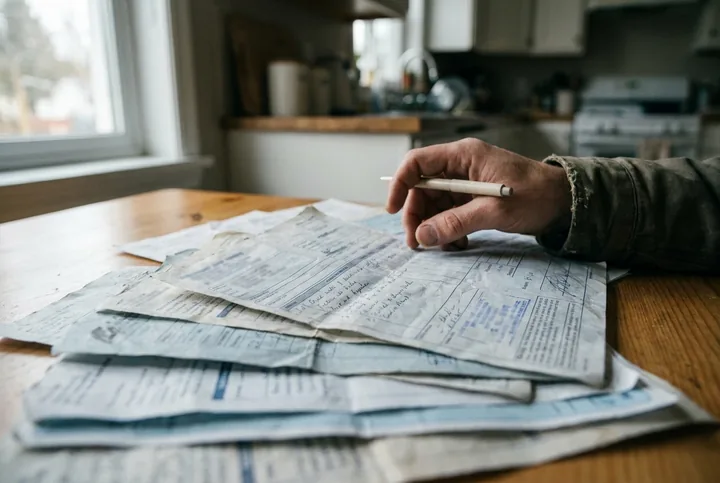
Vehicle repair invoices spread across a kitchen table with a hand hovering over them
On your own1 / 4

Guessing which of New York's three routes your record supports

Four repairs of the same defect, 30 cumulative calendar days out of service, or the 20-day refusal route. They're alternatives and they count different things: the four-repair route needs the same defect described the same way each time, while the 30-day route adds up days across any number of faults. Which one your repair orders support decides how the claim gets built, and it's often not the one people assume.

A person on the phone at a home desk with a notepad of call notes
On your own2 / 4

Electing arbitration before understanding it binds you too

New York makes you choose up front, and the choice is close to irreversible. Once you go into the Attorney General's program, the arbitrator's decision binds you as well as the manufacturer, and all you keep is a 90-day window to move to vacate under CPLR Article 75. Plenty of people pick the route that sounds cheapest without being told that part.

A wall calendar with deadline dates circled in red beside a set of car keys
On your own3 / 4

Letting the service writer's wording break your repair count

The four-repair route needs the same nonconformity each time. If visit one says rough idle, visit two says hesitation and visit three says customer states check engine light, a manufacturer will argue those are three different complaints and none of them repeated four times. The fix is knowing at visit two what the paperwork has to say, not discovering it at the hearing.

One person alone at the end of a long empty hearing room table
On your own4 / 4

Facing the hearing and the mileage arithmetic alone

The manufacturer sends someone who does these every week. The deduction under section 198-a(a)(4) is fixed arithmetic, but what goes into it, the purchase price and the mileage figure used, is exactly where a refund quietly shrinks. So is the reasonable allowance for damage. Both are worth checking before you accept anything.

Hands working through an organized stack of repair orders with a highlighter and index tabs
With RockPoint Law1 / 4

A clear read on the four-repair, 30-day or refusal route

We read the repair orders against all three routes and tell you which the record supports, and where it falls short of the one you were counting on. That read is free, and it's often the difference between a claim that's ready and one that needs two more documents first.

A certified mail envelope and return receipt card being prepared on a desk
With RockPoint Law2 / 4

The arbitrate-or-sue decision made before it's irreversible

We walk through what each route gives up. Arbitration is fast, costs $250 and the manufacturer can't refuse it. Court is slower, keeps more remedies open and lets a federal warranty claim run alongside. Which is right depends on the vehicle and the record, and it's a decision worth making deliberately rather than by default.

An open case planner with color-coded deadline tabs being marked
With RockPoint Law3 / 4

Repair orders read for the language the statute needs

We check that the same defect reads as the same defect, that drop-off and pick-up dates are recorded so the calendar-day count holds, and that nothing has been quietly written up as customer education. Where the record has gaps, there's usually still time to close them.

A bound exhibit folder open on a conference table
With RockPoint Law4 / 4

The case prepared and presented for you

We assemble the exhibits, calculate the refund properly, and appear at the Hempstead or Central Islip hearing so you don't have to face it. If you'd rather not attend at all, you generally don't need to.

Nassau and Suffolk

On the ground across Long Island

Two counties, nearly three million people

Going by the Census Bureau's 2024 estimates, Nassau and Suffolk hold about 2.93 million people between them, and if Long Island were a state it would be one of the larger ones in the country. Mineola is the county seat for Nassau and Riverhead is the one for Suffolk, and the distance between those two matters more than people tend to expect, since a legal problem that's a twenty-minute errand in Garden City turns into a two-hour round trip if you're coming from Southold.

A place that runs on cars

People out here drive, in a way the rest of the New York metro doesn't. The Long Island Rail Road is the busiest commuter railroad in North America, going by the MTA's own description, and even so most of Long Island is still driving. Commuters head west on the Long Island Expressway and the Northern State Parkway, they cut across the middle of Nassau on the Meadowbrook and Wantagh parkways, and they run the South Shore on Sunrise Highway, while Route 110 carries the Melville and Huntington office corridor. Northern Boulevard, which is where our own office sits, carries Great Neck and Roslyn and most of the dealerships in that part of Nassau too.

Who puts those miles on the road

Northwell Health, over in New Hyde Park, is the largest private employer in the state, and Broadridge Financial is in Lake Success, while Henry Schein and Canon's Americas headquarters are both in Melville. Then there's Brookhaven National Laboratory at Upton, and Stony Brook University, which is the largest single-site employer on the Island.

The odometer closes the window first

Because of those commutes, a lot of Long Island lemon law claims run out of mileage before they ever run out of time. New York's coverage window closes at 18,000 miles or two years, whichever comes first, and an LIE commute reaches 18,000 miles well inside the first year. So if your car has been back three times already and you find yourself watching the odometer, that's when to call us, and not after the fourth visit.

We take claims from all over both counties, including places like:

  • Hempstead
  • Garden City
  • Great Neck
  • Port Washington
  • Mineola
  • Hicksville
  • Levittown
  • Massapequa
  • Freeport
  • Valley Stream
  • Huntington
  • Melville
  • Babylon
  • Islip
  • Smithtown
  • Commack
  • Bay Shore
  • Patchogue
  • Ronkonkoma
  • Riverhead

How to reach us

Our office is at 1129 Northern Blvd., Suite 404, Manhasset, NY 11030, in the Town of North Hempstead, and it's the firm's only New York office. Most people never actually need to come in, since the arbitration request is a form and the repair orders are scans, and the hearing gets set at Hempstead or Central Islip and not at our door, but it's a real office with real people in it and you're welcome to stop by. The quickest way to start is the online intake form, and we review every request and respond as soon as we can, or you can just call (516) 550-3323.

If it's the statute itself you're after and not so much the geography, have a look at our New York lemon law page, and our New Jersey guide covers the rules across the line.

Other New York pages

Case Results

Recent RockPoint Law recoveries

These figures come from our firm's published lemon law settlement record across brands. They are firmwide results, not Long Island outcomes, and they show what a well-documented defect claim can be worth when it's handled properly.

$160,264 BMW X6

Recovery on a vehicle plagued by engine, electrical, and suspension defects.

$144,550 Porsche Macan

Refund for a Macan with recurring suspension, drivetrain, electrical, and HVAC problems.

$110,289 Rivian R1T

Recovery after repeated electrical, drive-unit, and suspension failures on an electric pickup.

Figures are drawn from our firm's published settlement record and are not specific to Long Island matters. Prior results do not guarantee or predict a similar outcome in any future case. See more RockPoint Law settlements 

RockPoint Law, by the numbers

$50M+**
Recovered for clients
3,000+‡
Cases handled
25+
Years of combined experience
97%*
Resolution rate
  • Free Consultation
  • No attorney's fees unless we recover for you.†
Recent Google reviewsAcross all RockPoint offices: 4.8 from 19 Google reviews
  • ★★★★★a month ago
    I had a really good experience with RockPoint Law. The whole process was a lot easier than I expected and everyone I dealt with was helpful and responsive. Whenever I had a question, I was able to get an answer without feeling like I was chasing anyone down. They handled everything and kept me updated along the way. Definitely glad I reached out to them.
    Ronen S. Malekmehr
  • ★★★★★6 months ago
    Saw RockPoint Law and wasn't sure. Called anyway because I was at my wit's end. Natalie Nassi answered and she remembered me from somewhere else. Same calm voice, same no-nonsense approach. She took my case and handled everything. Manufacturer bought the car back. Name on the door changed but Natalie didn't. That's what matters to me.
    Tanja Moldenhauer
  • ★★★★★6 months ago
    Saw RockPoint Law online and wasn't sure because I hadn't heard of them. But I was desperate. My car had been in and out of the shop for months. Called them up and the person I spoke with was so easy to talk to. No legal mumbo jumbo, just straight talk. They took my case and got me a buyback. New name but they know what they're doing. Would recommend.
    Rodolfo Paulino
2 more Google reviews
  • ★★★★★6 months ago
    Honestly wasn't sure about RockPoint Law since I hadn't heard of them before. But I was desperate. My car had been in the shop five times for the same problem and nobody could figure it out. Service advisor started avoiding my calls. I found RockPoint online, called, and the person I talked to was really down to earth. They took my repair orders and handled the whole thing. A few months later, the manufacturer bought the car back. New name but they got it done. Would use them again in a heartbeat.
    Om Shiv
  • ★★★★★6 months ago
    Saw RockPoint Law pop up when I was googling lemon law help. Wasn't sure about the name but figured I'd give it a shot. My Jeep Gladiator had a death wobble at highway speeds—front end would shake violently. Dealer replaced the steering stabilizer twice, still shook. The person I talked to at RockPoint was super calm and explained everything clearly. They handled the claim and Jeep bought the truck back. Glad I didn't let the new name scare me off. They got the job done.
    Víctor Torres

About this page

Written by the RockPoint Law Editorial Team · Reviewed by Steven P. Nassi, New York Attorney Registration No. 4263489 (NY Courts registration record). Prepared September 2026 to reflect the New York New Car Lemon Law, General Business Law section 198-a, and the Used Car Lemon Law at section 198-b, arbitrated under 13 NYCRR Part 300 with the supervision of the New York State Attorney General. See our editorial policy.

Anyone can check a New York attorney's registration and public discipline record in the Unified Court System's attorney directory. Search by registration number rather than by name. We think you should, for any firm you're considering, including this one.

Start here

Tell us what the car is doing in Long Island

Three details about the vehicle, and how to reach you.

  • The year and make of your vehicle
  • What the dealer has already tried, and whether you paid for it
  • Your name, phone and email. We review every request and respond as soon as we can

No cost, no obligation. Contacting RockPoint Law does not create an attorney-client relationship.

Meet the Team
Behind RockPoint Law

A dedicated team that stands with you through every step of your Lemon Law claim.

Aaron Waldo
Aaron Waldo
Attorney
U.S. Marine Corps veteran · Automotive background
Liam Jones
Liam Jones
Attorney
Licensed in New York & New Jersey
Christian Garcia
Christian Garcia
Senior Case Manager
Case management from intake through resolution
Rudy Gutierrez
Rudy Gutierrez
Intake Manager
First point of contact for new clients & case evaluations
FAQ

Long Island lemon law questions

The questions Nassau and Suffolk drivers ask us most, and what you should know before you send anything.

Do I have to travel to Manhattan to file a lemon law claim from Long Island?

No. The request is a form sent to the Attorney General by email or post, and the hearing is held near you. Nassau and Suffolk are both named hearing areas, and the form offers Hempstead and Central Islip.

No. The Request for Arbitration is a form, and it goes to the Attorney General's Lemon Law Arbitration Unit by email or post rather than in person. Once the claim is accepted it passes to the program administrator, which schedules the hearing near you. This is where Long Island does better than most of the state: 13 NYCRR section 300.7(g) requires regular hearing sites in listed areas, and Nassau County and Suffolk County are both named in that list. On the Attorney General's current form the Long Island hearing choices are Hempstead and Central Islip. The same rule guarantees a site within 100 miles of your home, which on Long Island is never the binding constraint.

Which court would hear a lemon law lawsuit for a Nassau or Suffolk driver?

Most claims go to arbitration, so a lawsuit is the exception. When one is filed, the amount at stake decides the court: Supreme Court in Mineola or Riverhead, a county district court for claims up to $15,000, or federal court at Central Islip.

It depends on the amount and on whether you sue at all, since most claims go to arbitration instead. A substantial claim belongs in Supreme Court: Nassau's sits at 100 Supreme Court Drive in Mineola, and Suffolk's principally in the Hon. Alan D. Oshrin Supreme Court Building at 1 Court Street, Riverhead. Smaller claims can go to a county district court, and Long Island is unusual in having them at all: Uniform District Court Act section 202 caps their civil jurisdiction at $15,000. A federal warranty claim goes to the Eastern District of New York at the Alfonse M. D'Amato United States Courthouse, 100 Federal Plaza, Central Islip. Appeals travel to the Appellate Division, Second Department in Brooklyn.

How many repair attempts does my vehicle need before it qualifies in New York?

Four repairs of the same defect is one route, but not the only one. Thirty cumulative calendar days out of service also qualifies, and so does the 20-day refusal route. You only need to meet one.

Four, if you are counting repairs of the same defect. General Business Law section 198-a(d)(1) presumes the manufacturer has had a reasonable number of attempts once the same nonconformity has been repaired four or more times inside the coverage period and still has not been fixed. But four is not the only route. Section 198-a(d)(2) gets you there on 30 or more cumulative calendar days out of service, and those days can be for several different faults rather than one. A third route at section 198-a(b)(2) needs no repair count whatsoever if the dealer refused to begin repairs and the manufacturer then let 20 days pass. New York has no reduced count for safety defects, so a dangerous fault still needs one of the three routes above. Only one has to be satisfied.

What is the deadline, and how does it apply to a Long Island purchase?

There are two clocks. The defect has to appear within 18,000 miles or two years from delivery, and you then have four years from delivery to start arbitration or a lawsuit. On a Long Island commute the mileage usually runs out first.

Two different clocks, and people confuse them constantly. The coverage window is the first 18,000 miles of operation or two years from original delivery, whichever comes first, and the defect has to appear inside it. Separately, section 198-a(j) gives you four years from original delivery to start either arbitration or a lawsuit. That is one deadline covering both routes; New York has no extra post-window arbitration deadline of the kind Texas and Georgia impose. The Long Island wrinkle is the first clock: with a commute on the Expressway or the Northern State, 18,000 miles routinely arrives inside the first year, long before the two years are up. Section 198-a(e) extends the window day for day if repairs were unavailable because of a strike, flood or similar disaster, but that is a narrow exception.

My car was bought in Queens but I live in Nassau. Does that matter?

Usually not. The statute asks that the car was sold and registered in New York State, not in your own county. Where you live decides your hearing site and which county's court would hear a lawsuit.

Usually not, and this comes up constantly given how many Long Island drivers buy across the county line. What section 198-a(b)(1) asks is that the vehicle was sold and registered in New York State, not that it was sold in your own county. A car bought at a Queens or Brooklyn dealership and registered to a Nassau or Suffolk address is squarely covered. Where you live does matter for two practical things: which hearing site you are assigned, and which county's court would hear a lawsuit. Buying out of state is the situation that genuinely complicates matters, so tell us early if that is what happened, because the answer can turn on where the vehicle was first registered rather than where you signed the paperwork.

Does the New York lemon law cover a used car I bought on Long Island?

Often, under a separate statute, section 198-b. The dealer's written warranty runs by mileage at sale, and the presumption is three repairs or 15 days out of service instead of four and 30.

Often, yes, but under a different statute with different numbers. General Business Law section 198-b requires a dealer to give a written warranty, and its length depends on mileage at sale: up to 36,000 miles gets 90 days or 4,000 miles, over 36,000 and under 80,000 gets 60 days or 3,000 miles, and 80,000 up to 100,000 gets 30 days or 1,000 miles. The presumption is three repairs or 15 days out of service, not four and 30. It does not reach vehicles sold under $1,500, those over 100,000 miles where that is stated in writing, or private sales between neighbors: a dealer means someone selling three or more used vehicles a year. One useful backstop is that 45 cumulative days out of service qualifies even where some of that time was waiting on parts.

What can I recover if my vehicle is found to be a lemon?

You choose between a refund and a comparable replacement. Nothing is deducted for your use of the car until 12,000 miles, and a manufacturer that pays late owes $25 per business day, up to $500.

A refund or a replacement, and section 198-a(c)(1) gives that choice to you rather than to the manufacturer. A refund means the full purchase price plus the fees and charges that came with it, including license and registration. The one deduction is for your use of the car, and it does not begin until 12,000 miles: below that, nothing is deducted at all. Above it the formula is fixed, being the miles over 12,000 times the price divided by 100,000. If the manufacturer is late paying after you accept an award, section 198-a(h) adds $25 for every business day, capped at $500. A court may also award attorney fees. Used vehicles work differently again, with a refund under section 198-b and no mileage deduction applied to it at all.

Do I have to notify the manufacturer before arbitration?

There's no single mandatory letter that unlocks a New York claim, but you must report the defect inside the coverage period. A certified letter becomes the claim itself when a dealer won't begin repairs within seven days.

You must report the defect during the coverage period, and putting things in writing is always the stronger course. New York does not impose a Georgia-style final repair opportunity notice with its own clock, so there is no single mandatory letter that unlocks the claim. There is one situation where a letter is the claim: under section 198-a(b)(2), if the dealer will not begin repairs within seven days of your report, written notice to the manufacturer by certified mail with return receipt starts a 20-day clock, and if repairs still do not commence the full remedy applies. Send anything important by certified mail with return receipt and keep the green card, because proving the date the manufacturer received something is what makes that 20-day clock enforceable rather than theoretical.

How long does a Long Island lemon law case usually take?

Faster than most legal processes. The hearing is set no later than 35 days from the filing date, and the manufacturer has 30 days to comply after a decision. Preparation before filing is what usually takes longest.

Faster than most legal processes, which is the main argument for the arbitration route. Under 13 NYCRR section 300.7 an oral hearing is scheduled no later than 35 days from the filing date, and you get at least eight days' notice of the date, time and place. Evening and weekend slots are available. After a decision, the manufacturer has 30 days to comply. So a straightforward claim can run from filing to money in a few months rather than a few years. What lengthens it is almost always the preparation before filing, meaning chasing repair orders the dealership never printed. Litigation in Supreme Court or at Central Islip takes considerably longer, which is part of why the arbitration route is worth serious thought even though its decision binds you as well.

What does a Long Island lemon law attorney cost?

We work on contingency, so there's no fee unless we recover for you. The arbitration filing fee is separate: $250 for a new car and $120 for a used car, and it comes back if you win.

We handle these on a contingency basis: no upfront legal fees, and no fee unless we recover for you. That is separate from the arbitration filing fee, which goes to the program rather than to us and is $250 for a new car, motor home or motorcycle and $120 for a used car. That fee comes back to you if you win, and it is refundable if you withdraw within seven business days of the filing date. Beyond that, both section 198-a(l) and the federal 15 U.S.C. section 2310(d)(2) allow a court to award attorney fees to a consumer who prevails, though in both cases the award is discretionary rather than automatic and neither is a fee decided by the arbitrator inside the arbitration itself.

My vehicle is an EV or a diesel truck bought in Suffolk. Is it still covered?

Yes, if it was sold and registered new in New York and the defect appeared inside the coverage period. The statute doesn't distinguish by powertrain, and these claims often qualify on the 30-day route.

Yes, if it was sold and registered new in New York and the defect appeared inside the coverage period. Nothing in the statute distinguishes by powertrain. In practice both types tend to qualify on the 30-day route rather than the four-repair one, because emissions systems and battery or drive-unit faults keep vehicles off the road for long stretches while parts are sourced. Software updates that do not fix the problem still count: each visit should still generate a repair order, and often it does not. The Attorney General's program also accepts motorcycles and motor homes at the same $250 filing fee. Our electric vehicle and diesel emissions pages go into detail on how each of those claims is usually built.

What should I bring to a free case review?

Bring whatever you have. Repair orders matter most, because they carry the complaint wording and the dates, followed by the purchase or lease agreement and anything in writing from the dealer or manufacturer.

Whatever you have, in whatever state it is in. The most useful items are every repair order and service invoice, because those carry the complaint wording and the drop-off and pick-up dates that both qualifying routes are counted from. After that: the purchase or lease agreement, the window sticker if you kept it, the warranty booklet, your current mileage, and anything in writing from the dealership or the manufacturer, including texts and emails. If there are gaps, say so rather than worrying about them. A dealership must give you a copy of a repair order on request, and chasing missing ones is a normal part of the work rather than a problem you have to solve first.

Don't take on the manufacturer alone.

Tell us the vehicle and what the dealer has already tried. No fee unless we recover for you.†

Free & Confidential — No attorney’s fees unless we recover for you.